📚 Learn, Apply, Win
Explore articles designed to spark ideas, share knowledge, and keep you updated on what’s new.
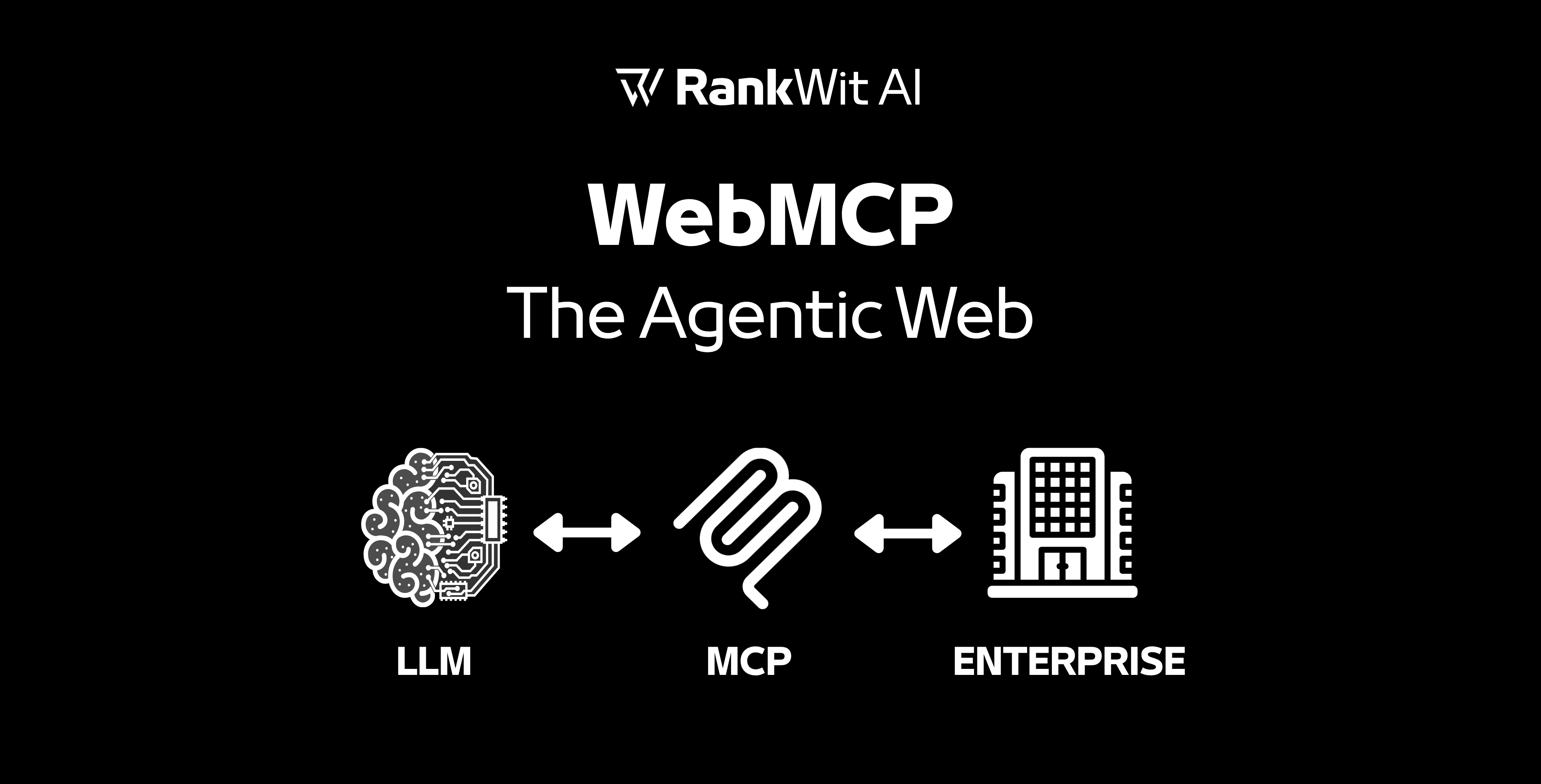
Security is baked into the protocol's core. Unlike "headless" automation, WebMCP operates within the user’s current browser session:
webmcp-tools suite.
We test how ChatGPT, Gemini, Perplexity, and Claude respond today when travelers ask about your destination, your category, or your direct competitors.
You receive a full report showing: where you are currently visible and where you are 'invisible' to AI; the specific prompts that are currently losing you bookings or visitors to the competition; and a roadmap to claim your AI Share of Voice. No commitment required.
Structured data uses standardized formats like schema markup to explain the meaning of your content to search engines. This allows platforms like Google and AI-powered search systems to better interpret your pages, connect them with relevant entities, and potentially display enhanced results such as rich snippets or knowledge panels.
RankWit.AI deploys advanced schema strategies to transform content into machine-readable knowledge assets.
We do not implement structured data as a technical add-on — we design semantic architectures that position brands as authoritative nodes within their industry knowledge graph.
This dramatically improves visibility in SERPs and increases the likelihood of being surfaced in AI-generated responses.
Generative Engine Optimization (GEO), also known as Large Language Model Optimization (LLMO), is the process of optimizing content to increase its visibility and relevance within AI-generated responses from tools like ChatGPT, Gemini, or Perplexity.
Unlike traditional SEO, which targets search engine rankings, GEO focuses on how large language models interpret, prioritize, and present information to users in conversational outputs. The goal is to influence how and when content appears in AI-driven answers.
Generative Engine Optimization (GEO) is becoming increasingly critical as user behavior shifts toward AI-native search tools like ChatGPT, Gemini, and Perplexity.
According with Bain, recent data shows that over 40% of users now prefer AI-generated answers over traditional search engine results.
This trend reflects a major evolution in how people discover and consume information.
Unlike traditional SEO, which focuses on ranking in static search results, GEO ensures that your content is understandable, relevant, and authoritative enough to be cited or surfaced in LLM-generated responses.
This is especially important as AI platforms begin to integrate live web search capabilities, summaries, and citations directly into their answers.
The urgency is amplified by user traffic trends. According to Similarweb data (see chart below), ChatGPT visits are projected to surpass Google’s by December 2026 if current growth continues.
This suggests that visibility in LLMs may soon be as important—if not more—than traditional search rankings.

Within our ecosystem, we evaluate AI platforms based on real profitability criteria. We do not simply look for the most popular infrastructure, but for platforms that offer robust APIs, enterprise-grade data security, and native integration with existing systems to ensure immediate return on investment.
Compliance with the EU AI Act is fundamental to our search strategy. We help brands adapt to the new 2026 transparency obligations, ensuring their content is properly labeled and that their recommendation systems meet limited-risk standards—protecting both their reputation and visibility in international markets.