How does RankWit.AI use entity-based SEO to help brands achieve higher visibility in AI-driven and semantic search environments?

At RankWit.AI, we optimize entities — not just keywords.
We define and structure who your company is, what it offers, and how each service connects within a semantic ecosystem.

This allows AI-native systems to clearly categorize, contextualize, and prioritize your brand within knowledge graphs. The result is stronger semantic clarity, improved AI citation probability, and long-term search authority.

Last updated at  
April 13, 2026
Other FAQ
Why is entity-based content and semantic SEO becoming essential for B2B search visibility in AI-driven search environments?
Arrow

Entity-based SEO helps AI systems understand who a company is, what it offers, and how it relates to other concepts in an industry. For B2B organizations, strengthening entity signals and semantic relationships increases the likelihood of being recognized as an authoritative source in AI-generated search results.

Read More
ArrowArrow right blue
How does AI optimization affect the attractiveness of the territory and tourist flows?
Arrow

This is the core objective. Travelers who discover a destination through AI recommendations arrive on institutional portals or local operator websites with very strong travel intent.

Properly positioning the territory within AI means capturing demand before competitors, reducing dependence on third-party distribution channels, and enhancing the entire local economic ecosystem.

Read More
ArrowArrow right blue
How does RankWit.AI implement structured data and knowledge graph architecture to increase brand authority in search engines and generative AI systems?
Arrow

RankWit.AI deploys advanced schema strategies to transform content into machine-readable knowledge assets.

We do not implement structured data as a technical add-on — we design semantic architectures that position brands as authoritative nodes within their industry knowledge graph.

This dramatically improves visibility in SERPs and increases the likelihood of being surfaced in AI-generated responses.

Read More
ArrowArrow right blue
How can businesses integrate artificial intelligence into their SEO strategies to improve search performance and digital visibility?
Arrow

Integrating AI into SEO allows businesses to analyze large datasets, identify search trends, and optimize content more efficiently. AI tools can support keyword research, content optimization, and performance analysis, helping companies improve their search visibility.

Read More
ArrowArrow right blue
What role does WebMCP play in Retrieval-Augmented Generation (RAG) and real-time search?
Arrow

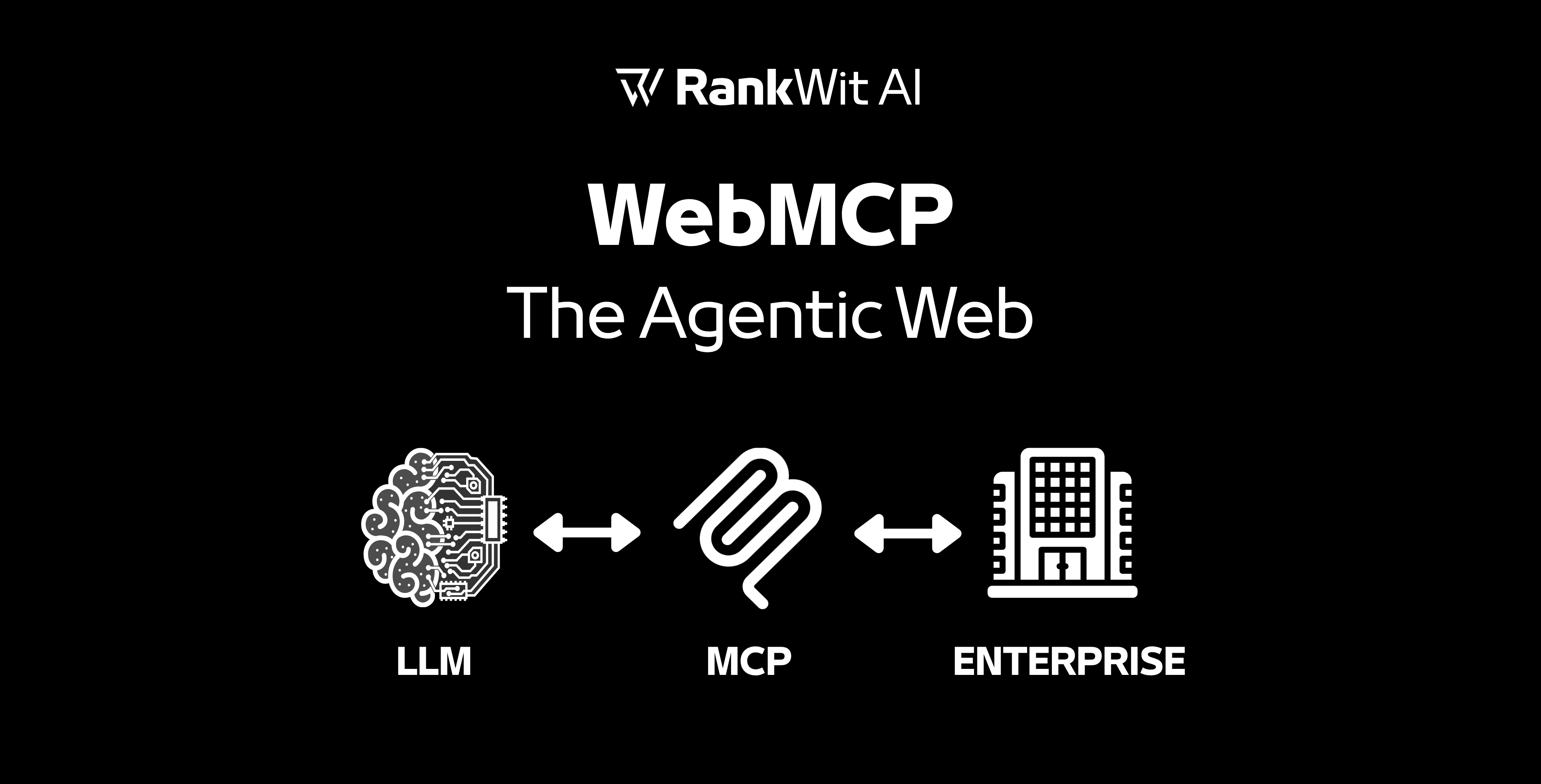
Traditional LLMs are limited by their training data "cutoff" dates. WebMCP bridges this gap by enabling Dynamic Context Injection:

  • The model identifies it needs live data (e.g., "What is the current inventory of Product X?").
  • It uses the WebMCP bidirectional channel to query the server.
  • The server returns structured data, which the AI then uses to generate an accurate, up-to-the-minute response.

Read More
ArrowArrow right blue
How does WebMCP handle user privacy and prevent AI agents from performing unauthorized actions?
Arrow

Security is baked into the protocol's core. Unlike "headless" automation, WebMCP operates within the user’s current browser session:

  • Consent Gate: The browser acts as a gatekeeper, prompting the user to approve tool calls.
  • Scoped Access: AI agents only see the specific tools the developer has explicitly registered via the webmcp-tools suite.
  • Authentication: It leverages the site's existing login and security protocols, ensuring the AI never bypasses standard safety measures.

Read More
ArrowArrow right blue
What key elements should be included in a strong business case for AI and SEO initiatives?
Arrow

A strong business case should include clear goals, expected outcomes, cost analysis, and measurable performance indicators. These elements help organizations assess the feasibility and long-term value of AI and SEO initiatives.

Read More
ArrowArrow right blue
What is AI Search Optimization and why is it important?
Arrow

AI Search Optimization refers to the practice of structuring, formatting, and presenting digital content to ensure it is surfaced by AI systems—particularly large language models (LLMs)—in response to user queries.Choosing a clear, unified name for this emerging field is crucial because it shapes professional standards, guides tool development, informs marketing strategies, and fosters a cohesive community of practice. Without a consistent term, the industry risks fragmentation and inefficiency, much like early digital marketing faced before "SEO" was widely adopted.

Read More
ArrowArrow right blue
Is ChatGPT Instant Checkout available for all e-commerce platforms and regions?
Arrow

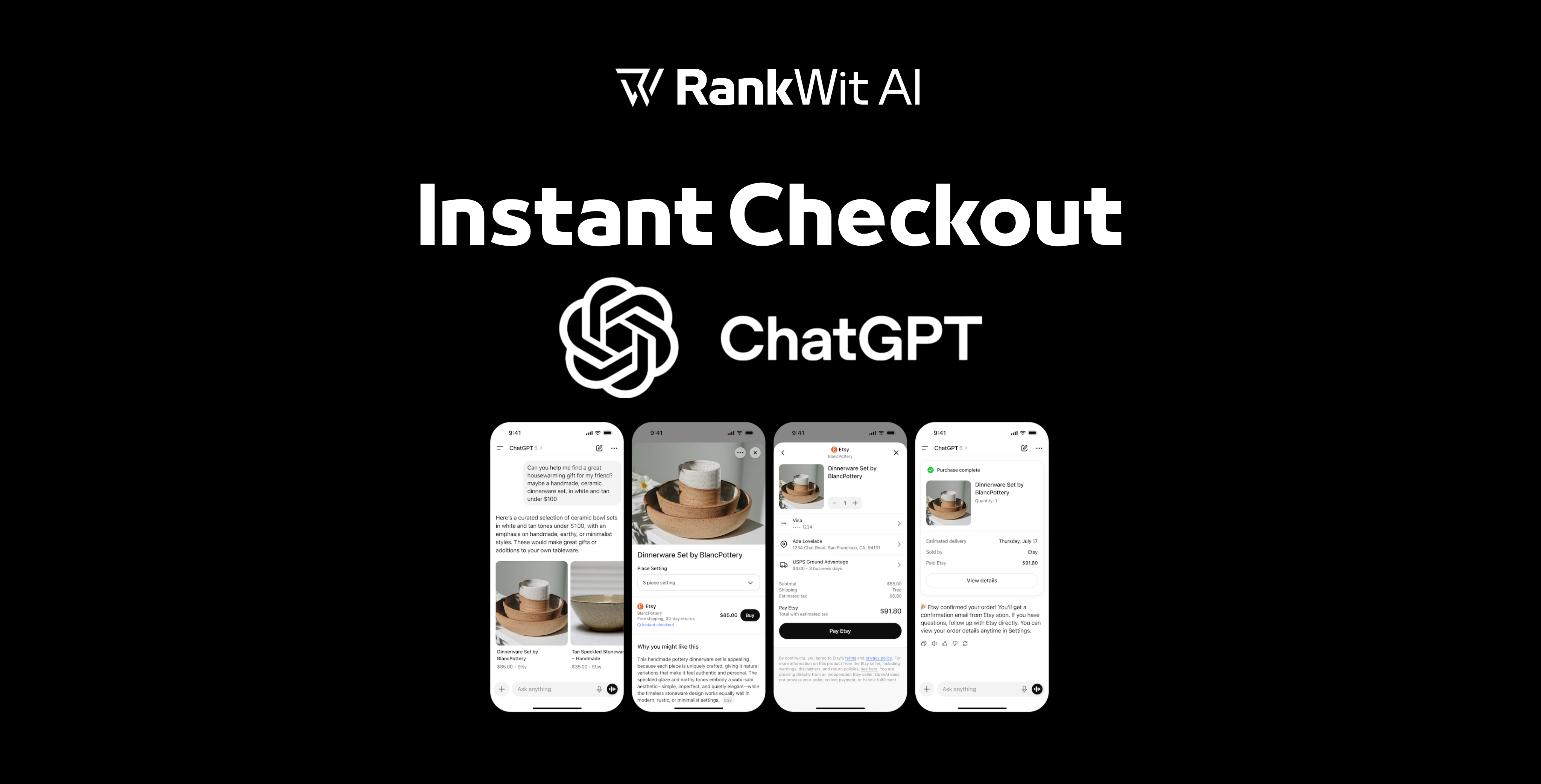
As of now, ChatGPT Instant Checkout is available only for merchants operating in the United States.
If your online store runs on Shopify or Etsy, you can already take advantage of this feature without any additional implementation, since these platforms are directly supported by OpenAI’s infrastructure.

For custom-built or enterprise e-commerce systems, a dedicated integration following the Agentic Commerce Protocol (ACP) is required.
Rankwit can assist your team in developing this integration—allowing you to access the U.S. market immediately and prepare for future international expansion as OpenAI rolls out the program globally.

Read More
ArrowArrow right blue
How long does it take to see measurable results from AI Optimization?
Arrow

Most travel entities record measurable improvements in AI citations and recommendations within 30–60 days.

Full, cumulative results typically emerge between 90 and 180 days, depending on your brand's starting authority and the competitiveness of your specific market or destination.

Read More
ArrowArrow right blue

📚 Learn, Apply, Win

Stay inspired with the latest stories, tips, and insights.
Explore articles designed to spark ideas, share knowledge, and keep you updated on what’s new.