Does ChatGPT share my personal data with retailers when using Shopping Research?

Your privacy remains a priority when using Shopping Research.
ChatGPT does not send your personal information, queries, or preferences to retailers or third-party sites.

The tool simply gathers publicly available product information online, such as specifications, reviews, and prices, and organizes it into a personalized buyer’s guide for you.

You stay in full control, and no personal data is exchanged during the process.

Last updated at  
April 13, 2026
Other FAQ
What role does WebMCP play in Retrieval-Augmented Generation (RAG) and real-time search?
Arrow

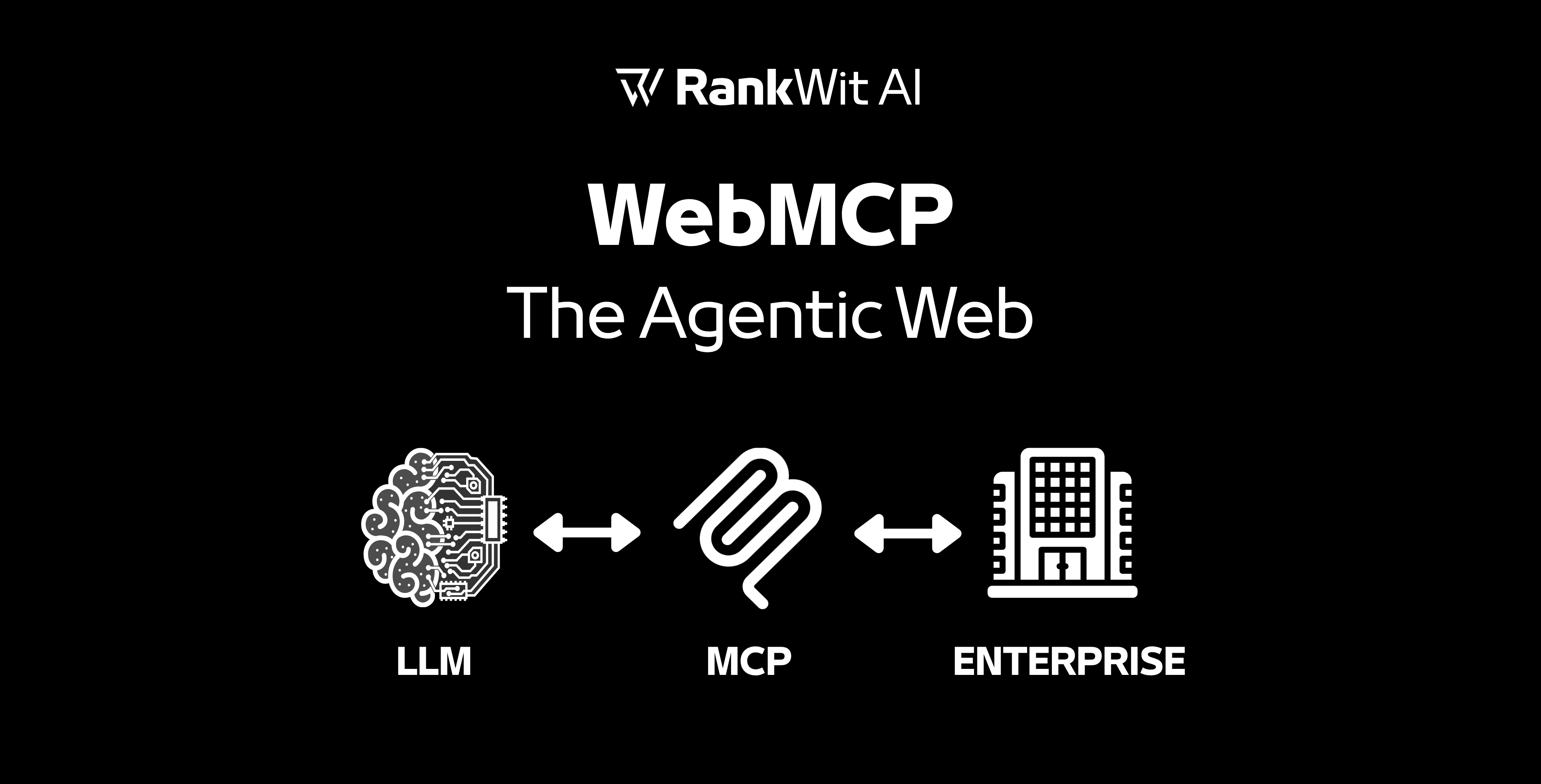
Traditional LLMs are limited by their training data "cutoff" dates. WebMCP bridges this gap by enabling Dynamic Context Injection:

  • The model identifies it needs live data (e.g., "What is the current inventory of Product X?").
  • It uses the WebMCP bidirectional channel to query the server.
  • The server returns structured data, which the AI then uses to generate an accurate, up-to-the-minute response.

Read More
ArrowArrow right blue
How is artificial intelligence changing the way local search results are generated and how users discover nearby businesses?
Arrow

Artificial intelligence is transforming local search by analyzing context, location signals, and user intent more accurately. AI-powered systems can recommend nearby businesses, summarize reviews, and deliver more personalized results, making it easier for users to discover relevant local services.

Read More
ArrowArrow right blue
What key elements should be included when optimizing content for AI-driven search systems?
Arrow

Effective AI content optimization involves creating well-structured content with clear headings, strong topical relevance, and semantic connections between ideas. These elements help search engines and AI systems better interpret and rank content.

Read More
ArrowArrow right blue
Why will optimizing content for large language models become more important for digital visibility in the future?
Arrow

Large language models are becoming central to search engines, digital assistants, and AI-powered tools. As these systems expand, businesses will need to ensure their content is optimized so AI models can easily interpret and reference their information.

Read More
ArrowArrow right blue
How is optimizing for AI-driven search engines different from traditional search engine optimization?
Arrow

While traditional SEO focuses mainly on keyword rankings and search result positions, AI search optimization emphasizes context, meaning, and relationships between topics. This approach helps AI systems better understand content and deliver more accurate responses to users.

Read More
ArrowArrow right blue
How can companies use business cases to justify investments in AI-driven search and digital optimization?
Arrow

Businesses use business cases to evaluate the potential impact of adopting AI technologies and search optimization strategies. By analyzing costs, expected improvements, and measurable results, companies can make informed decisions about implementing new digital initiatives.

Read More
ArrowArrow right blue
How should retailers and marketing professionals adapt their strategies to Google’s Generative AI Shopping features?
Arrow

Google's Generative AI Shopping features are redefining the journey from product discovery to purchase. For retailers and marketers, this demands a strategic shift across several areas.

Invest in Visual Quality

With AI-powered "Shop Similar" product matches based on visual and semantic similarity rather than keywords alone, product image quality has never mattered more. Low-resolution photos, inconsistent backgrounds, or images that don't accurately represent the product will be at a disadvantage.

Best practice: Use clean, high-resolution product photography. Make sure images accurately represent colors, textures, and proportions, as the AI matching engine evaluates these attributes directly.

Optimize Your Shopping Graph Presence

Google's Shopping Graph — a continuously updated dataset of over 35 billion product listings — is the backbone of every AI-powered shopping feature. Incomplete, outdated, or missing products simply won't surface in AI-generated results.

Best practice: Keep product feeds up to date with accurate titles, descriptions, prices, availability, and structured attributes. Treat Shopping Graph as critical infrastructure, not a secondary operation.

Prepare for Conversational Queries

As users learn to describe products in natural language (e.g., "gifts for a 7-year-old who wants to be an inventor"), search behavior will shift toward longer, more descriptive queries. These are exactly the kind of queries generative AI excels at interpreting.

Best practice: Write product descriptions and category content that mirrors how real people talk about your products. Focus on use cases, scenarios, and specific attributes rather than generic marketing copy.

Monitor AI-Referred Traffic

According to Adobe Analytics, traffic from generative AI tools to retail websites grew 1,200% year over year in early 2025, with visitors showing longer sessions, more page views, and lower bounce rates. While still a small share of total traffic, the growth trajectory is steep.

Best practice: Track AI-referred traffic as a distinct channel in your analytics. Identify which products and categories are being surfaced by AI tools and optimize accordingly.

The shift from keyword search to AI-powered generative search is not a future event, it's happening now. Retailers who adapt their product data, visual assets, and content strategy today will be positioned to capture the growing share of purchase intent driven by AI-powered discovery.

Read More
ArrowArrow right blue
How is GEO different from SEO?
Arrow

GEO (Generative Engine Optimization) is not a rebrand of SEO—it’s a response to an entirely new environment. SEO optimizes for bots that crawl, index, and rank. GEO optimizes for large language models (LLMs) that read, learn, and generate human-like answers.

While SEO is built around keywords and backlinks, GEO is about semantic clarity, contextual authority, and conversational structuring. You're not trying to please an algorithm—you’re helping an AI understand and echo your ideas accurately in its responses. It's not just about being found—it's about being spoken for.

Read More
ArrowArrow right blue
How does RankWit.ai handle Brand Mentions to help monitor and optimize my brand presence across the web, and what steps are involved in tracking, prioritizing, and acting on mentions to improve SEO and reputation?
Arrow

**Brand Mentions that drive action.** RankWit.ai continuously monitors the web for mentions of your brand, products, and campaigns across sources like news, blogs, forums, and social media. Each mention is analyzed for sentiment, authority, and relevance, so you can see not just where you’re discussed, but how it affects SEO and brand health.

**What you get:**
- **Real-time detection** of new mentions across a broad publisher set.
- **Sentiment and context** analysis to understand tone and potential risk or opportunity.
- **Impact ranking** that prioritizes high-value mentions by engagement potential, source credibility, and audience size.
- **Topic enrichment** to surface related keywords and content angles for optimization.
- **Alerts and digests** so you stay informed without noise.

**How to use Brand Mentions effectively**
1. **Set your brand and product keywords** to ensure comprehensive coverage.
2. **Filter by sentiment, platform, and authority** to focus on the signals that matter most.
3. **Action directly from the platform**: draft outreach, respond to feedback, or create content based on real conversations.
4. **Leverage insights for SEO**: identify backlink opportunities and topical gaps to strengthen content strategy.
5. **Track trends over time** to spot seasonal spikes and measure the impact of campaigns.

**Workflow quick-start**: enable Brand Mentions, configure keywords, set thresholds, and connect to your CRM or CMS for rapid response. For a guided tour, visit our [Try it now](/features) page and see Brand Mentions in action.

Read More
ArrowArrow right blue
How does WebMCP handle user privacy and prevent AI agents from performing unauthorized actions?
Arrow

Security is baked into the protocol's core. Unlike "headless" automation, WebMCP operates within the user’s current browser session:

  • Consent Gate: The browser acts as a gatekeeper, prompting the user to approve tool calls.
  • Scoped Access: AI agents only see the specific tools the developer has explicitly registered via the webmcp-tools suite.
  • Authentication: It leverages the site's existing login and security protocols, ensuring the AI never bypasses standard safety measures.

Read More
ArrowArrow right blue

📚 Learn, Apply, Win

Stay inspired with the latest stories, tips, and insights.
Explore articles designed to spark ideas, share knowledge, and keep you updated on what’s new.