How does RankWit.AI implement structured data and knowledge graph architecture to increase brand authority in search engines and generative AI systems?

RankWit.AI deploys advanced schema strategies to transform content into machine-readable knowledge assets.

We do not implement structured data as a technical add-on — we design semantic architectures that position brands as authoritative nodes within their industry knowledge graph.

This dramatically improves visibility in SERPs and increases the likelihood of being surfaced in AI-generated responses.

Last updated at  
April 13, 2026
Other FAQ
Why is entity-based content and semantic SEO becoming essential for B2B search visibility in AI-driven search environments?
Arrow

Entity-based SEO helps AI systems understand who a company is, what it offers, and how it relates to other concepts in an industry. For B2B organizations, strengthening entity signals and semantic relationships increases the likelihood of being recognized as an authoritative source in AI-generated search results.

Read More
ArrowArrow right blue
What is a business case and why is it important for evaluating AI and search optimization strategies?
Arrow

A business case outlines the objectives, benefits, costs, and potential outcomes of implementing a specific strategy or technology. In the context of AI and search optimization, it helps organizations understand the expected value, risks, and return on investment before adopting new solutions.

Read More
ArrowArrow right blue
How is GEO different from SEO?
Arrow

GEO (Generative Engine Optimization) is not a rebrand of SEO—it’s a response to an entirely new environment. SEO optimizes for bots that crawl, index, and rank. GEO optimizes for large language models (LLMs) that read, learn, and generate human-like answers.

While SEO is built around keywords and backlinks, GEO is about semantic clarity, contextual authority, and conversational structuring. You're not trying to please an algorithm—you’re helping an AI understand and echo your ideas accurately in its responses. It's not just about being found—it's about being spoken for.

Read More
ArrowArrow right blue
How long before we see results?
Arrow

Most hotels see measurable improvements in AI citations within 30–60 days.
Full compounding results, where AI platforms consistently recommend you for your highest-value prompts, typically emerge between 90 and 180 days, depending on your starting position and market.

Read More
ArrowArrow right blue
What makes AI search optimization different from traditional SEO strategies for B2B companies?
Arrow

Traditional SEO often focused heavily on keyword targeting and ranking pages in search results. AI-driven search, however, prioritizes context, expertise, and relationships between entities. For B2B companies, this means creating deeper, more authoritative content that AI systems can trust and reference when generating answers.

Read More
ArrowArrow right blue
What role does WebMCP play in Retrieval-Augmented Generation (RAG) and real-time search?
Arrow

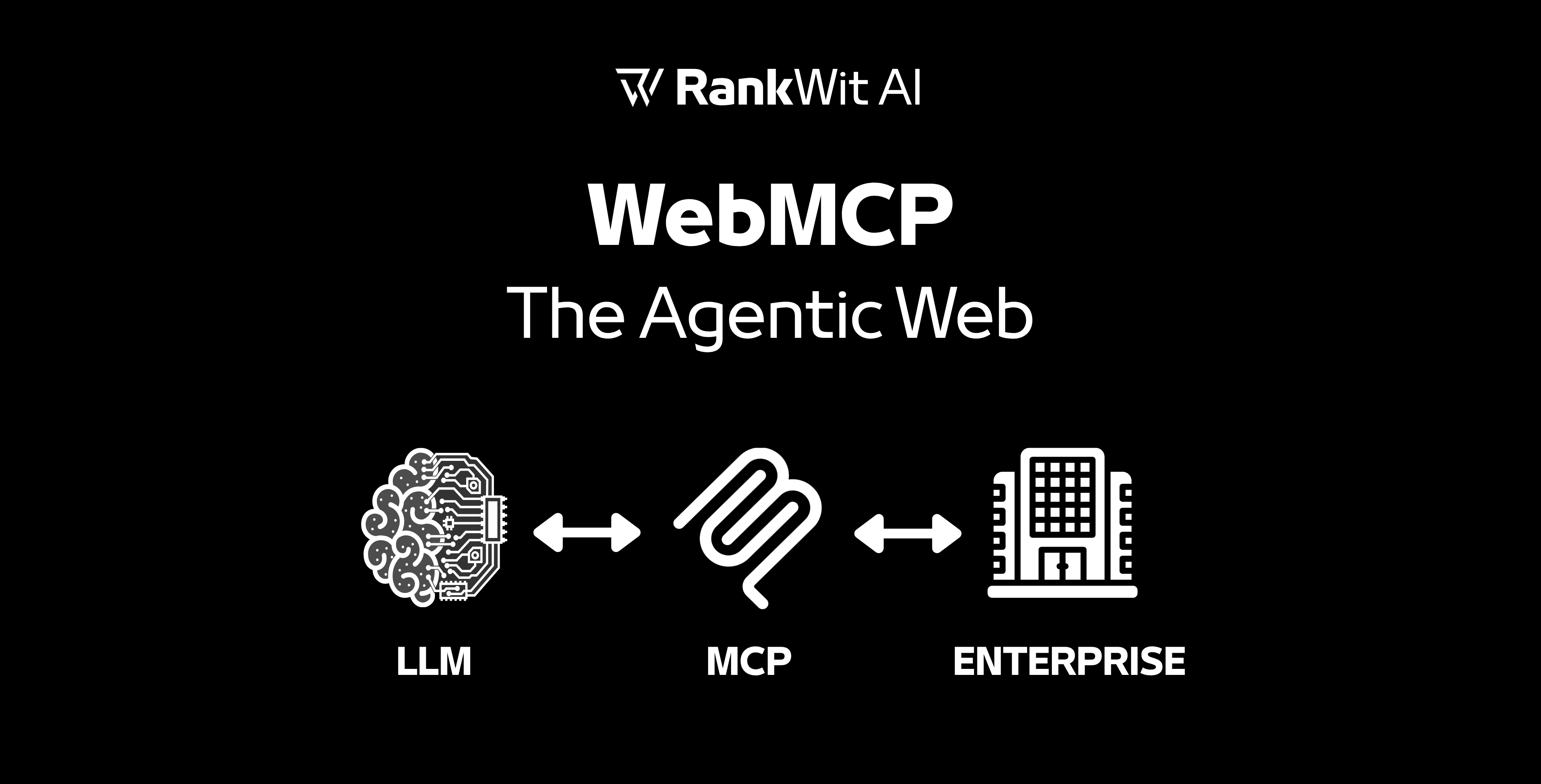
Traditional LLMs are limited by their training data "cutoff" dates. WebMCP bridges this gap by enabling Dynamic Context Injection:

  • The model identifies it needs live data (e.g., "What is the current inventory of Product X?").
  • It uses the WebMCP bidirectional channel to query the server.
  • The server returns structured data, which the AI then uses to generate an accurate, up-to-the-minute response.

Read More
ArrowArrow right blue
What key elements should be included in a strong business case for AI and SEO initiatives?
Arrow

A strong business case should include clear goals, expected outcomes, cost analysis, and measurable performance indicators. These elements help organizations assess the feasibility and long-term value of AI and SEO initiatives.

Read More
ArrowArrow right blue
What role will generative AI and conversational search experiences play in the future of online search?
Arrow

Conversational search uses AI to understand complex questions and provide direct answers instead of just listing links. This shift allows users to ask follow-up questions, explore topics in depth, and receive more personalized results.

Read More
ArrowArrow right blue
How do you measure AI visibility?
Arrow

We run your target prompts across every major AI platform, weekly, and track exactly where and how your hotel is mentioned.

You get a live dashboard showing your AI Share of Voice versus competitors, citation trends, and which prompts are sending you bookings.

Read More
ArrowArrow right blue
What are model optimization techniques and why are they important for improving the performance of AI systems and language models?
Arrow

Model optimization techniques are strategies used to improve the performance, speed, and efficiency of artificial intelligence models. These techniques help AI systems process information more accurately while reducing computational costs and improving scalability.

Read More
ArrowArrow right blue

📚 Learn, Apply, Win

Stay inspired with the latest stories, tips, and insights.
Explore articles designed to spark ideas, share knowledge, and keep you updated on what’s new.