Why is a well-defined content strategy important for visibility in AI-powered search engines?

A strong content strategy helps establish authority within a specific topic area. When content consistently covers relevant subjects with clear structure and reliable information, AI systems are more likely to recognize the source as trustworthy.

Last updated at  
April 13, 2026
Other FAQ
How can Rankwit help my business integrate with ChatGPT’s Agentic Commerce Protocol?
Arrow

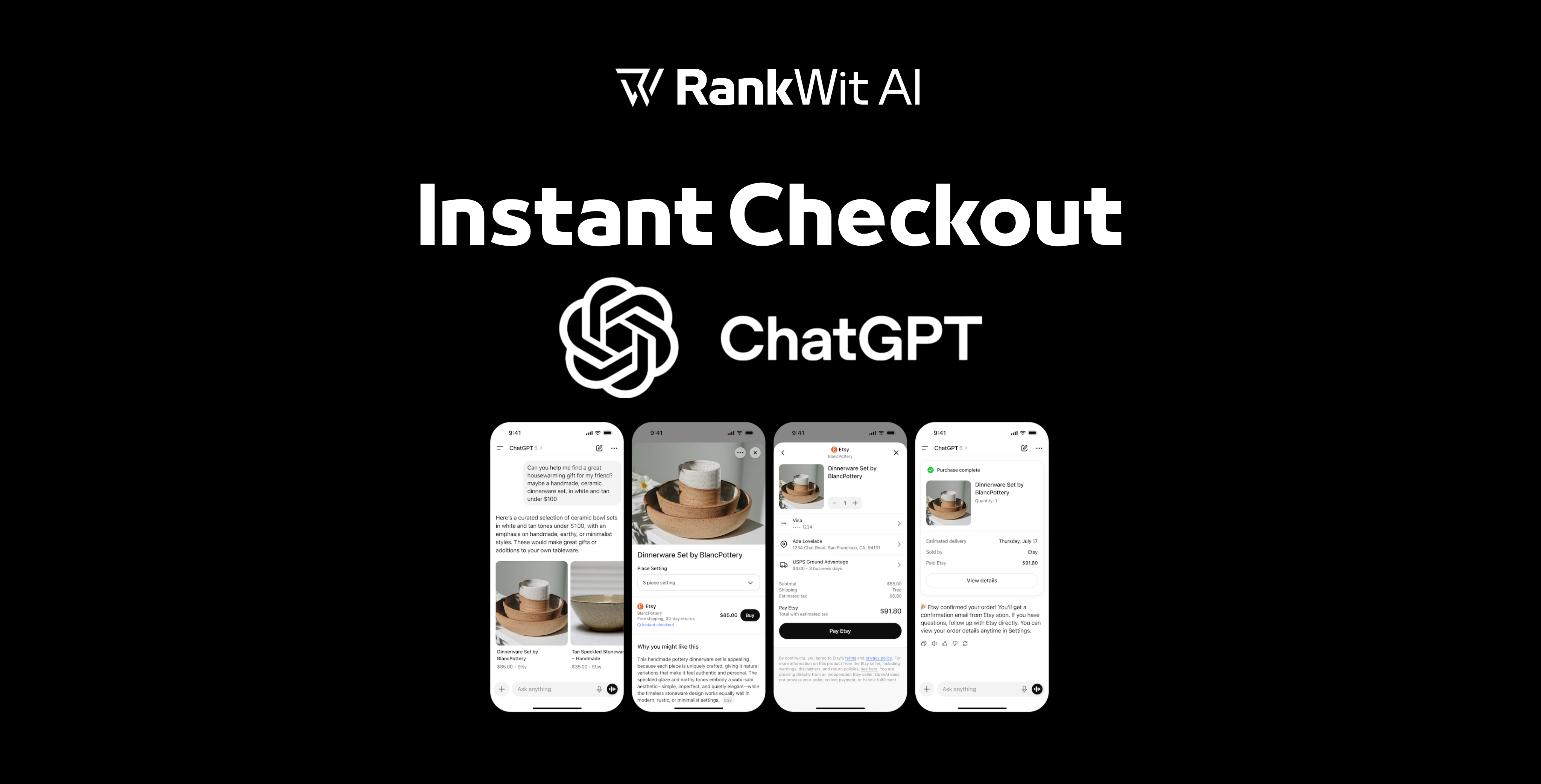
At Rankwit, we specialize in helping merchants take advantage of OpenAI’s Agentic Commerce Protocol (ACP).
Our team manages the entire integration lifecycle, from mapping your product catalog to OpenAI’s structured feed specification, to building the checkout API endpoints and connecting secure payment providers like Stripe.

By partnering with Rankwit, your business can:

  • Launch AI-powered conversational shopping experiences inside ChatGPT.
  • Achieve full compliance with OpenAI and PCI DSS standards.
  • Gain an unfair competitive advantage by adopting this technology before it becomes mainstream.

We tailor solutions to both enterprise and custom e-commerce platforms, ensuring a scalable and future-ready architecture.

Read More
ArrowArrow right blue
Why is Retrieval-Augmented Generation important for modern AI search systems and generative search engines?
Arrow

RAG allows AI systems to retrieve relevant content from trusted sources before generating responses. This improves the quality of answers in AI-powered search platforms and helps ensure that generated information is grounded in real data.

Read More
ArrowArrow right blue
What key elements should be included when optimizing content for AI-driven search systems?
Arrow

Effective AI content optimization involves creating well-structured content with clear headings, strong topical relevance, and semantic connections between ideas. These elements help search engines and AI systems better interpret and rank content.

Read More
ArrowArrow right blue
Will GEO replace SEO in how businesses get discovered online
Arrow

GEO is not a replacement for SEO—it’s an evolution of how users interact with information online.

While SEO (Search Engine Optimization) focuses on ranking content in traditional search engines like Google, GEO (Generative Engine Optimization) focuses on making content discoverable and useful within AI-powered search and assistant experiences.

Here’s how they differ and work together:

  • SEO drives visibility on web search engines. It optimizes for keywords, backlinks, and structured content to help pages rank high.
  • GEO optimizes for AI discovery. It ensures your content is easily understood, retrieved, and accurately cited by AI tools like ChatGPT, Perplexity, or Claude.

As AI assistants increasingly become the first touchpoint for information retrieval, GEO is becoming essential. But SEO is still critical for attracting traffic from search engines and building long-term domain authority.

In short: GEO enhances your content’s AI-readiness, while SEO ensures it’s search-engine-ready. The future is not SEO or GEO—it’s SEO and GEO, working in tandem.

Read More
ArrowArrow right blue
What criteria should organizations use to evaluate and select the most suitable AI platform for scalability, performance, security, and long-term return on investment?
Arrow

Within our ecosystem, we evaluate AI platforms based on real profitability criteria. We do not simply look for the most popular infrastructure, but for platforms that offer robust APIs, enterprise-grade data security, and native integration with existing systems to ensure immediate return on investment.

Read More
ArrowArrow right blue
How does RankWit track AI visibility?
Arrow

RankWit gives you a complete picture of how your brand appears across major AI platforms.
We run structured prompts through leading AI systems (including ChatGPT, Google AI Overview, and Perplexity) and then evaluate the responses for:

  • Brand mentions
  • Sentiment
  • Ranking or positioning
  • Competitor visibility
  • Opportunities and risks

This analysis helps you understand exactly how AI systems perceive and present your brand.

Read More
ArrowArrow right blue
What types of content structures help AI systems better understand and reference website content?
Arrow

Content designed for generative search engines should use clear headings, logical structure, concise explanations, and entity-focused information. This structure helps AI systems extract key insights and increases the chances of the content being referenced in AI-generated responses.

Read More
ArrowArrow right blue
How can companies use business cases to justify investments in AI-driven search and digital optimization?
Arrow

Businesses use business cases to evaluate the potential impact of adopting AI technologies and search optimization strategies. By analyzing costs, expected improvements, and measurable results, companies can make informed decisions about implementing new digital initiatives.

Read More
ArrowArrow right blue
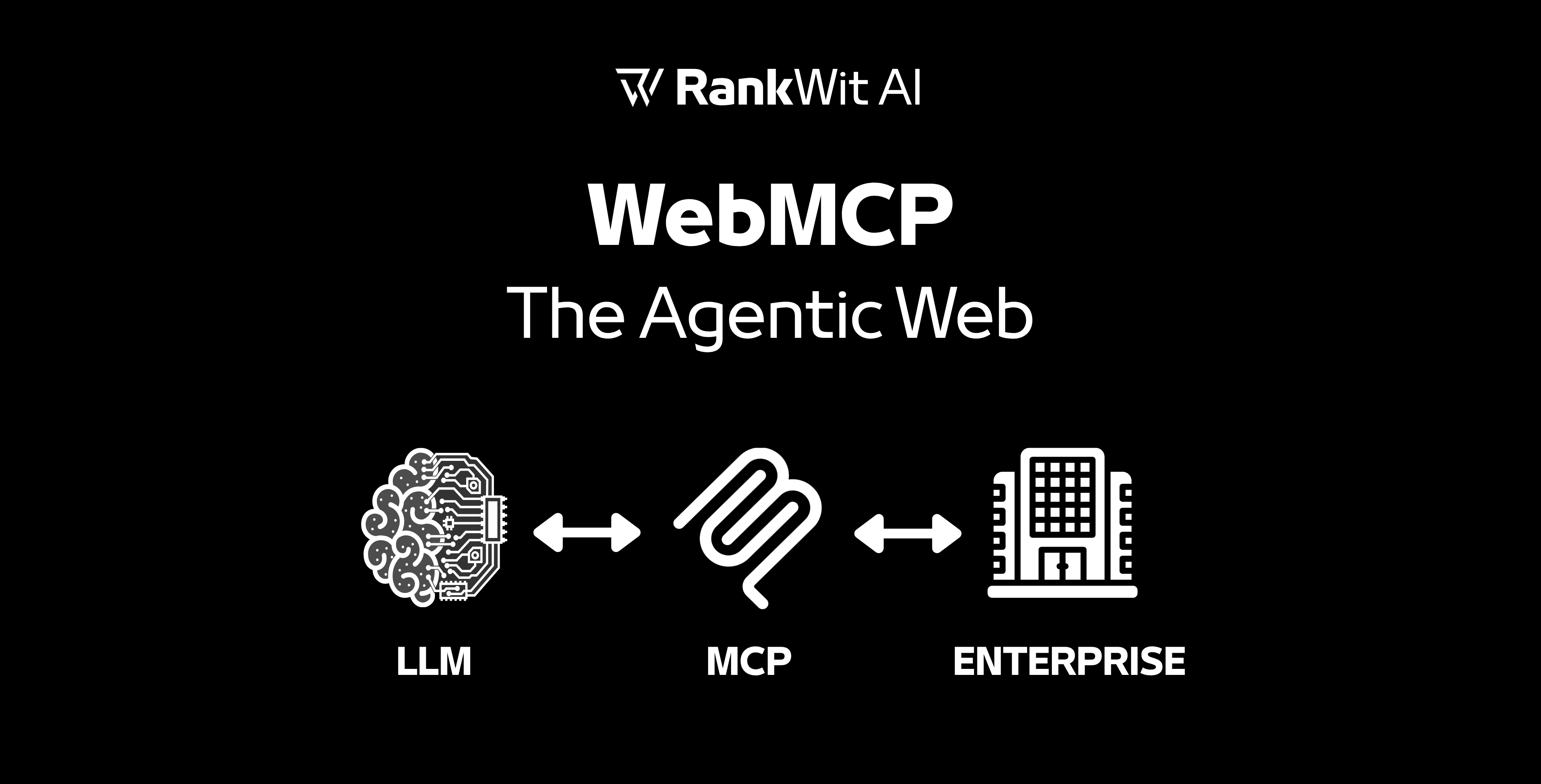
How does WebMCP differ from traditional web scraping when AI agents interact with websites?
Arrow

While traditional scraping is fragile and prone to breaking when a website's design changes, WebMCP provides a reliable "handshake" between the site and the AI.

  • Direct Access: Agents call specific functions (tools) instead of searching for buttons in code.
  • Resilience: Site layout changes don't break the integration as long as the underlying WebMCP schema remains the same.
  • Efficiency: It significantly reduces the tokens and compute power needed for an AI to "understand" a page

Read More
ArrowArrow right blue
How can analytics and AI metrics help businesses understand the performance of their content and search visibility?
Arrow

Analytics and AI metrics allow businesses to track how their content performs across search engines and digital channels. By analyzing data such as traffic, engagement, and visibility, companies can better understand what works and improve their strategies.

Read More
ArrowArrow right blue

📚 Learn, Apply, Win

Stay inspired with the latest stories, tips, and insights.
Explore articles designed to spark ideas, share knowledge, and keep you updated on what’s new.