How can analytics and AI metrics help businesses understand the performance of their content and search visibility?

Analytics and AI metrics allow businesses to track how their content performs across search engines and digital channels. By analyzing data such as traffic, engagement, and visibility, companies can better understand what works and improve their strategies.

Last updated at  
April 13, 2026
Other FAQ
How does RankWit.ai handle Brand Mentions to help monitor and optimize my brand presence across the web, and what steps are involved in tracking, prioritizing, and acting on mentions to improve SEO and reputation?
Arrow

**Brand Mentions that drive action.** RankWit.ai continuously monitors the web for mentions of your brand, products, and campaigns across sources like news, blogs, forums, and social media. Each mention is analyzed for sentiment, authority, and relevance, so you can see not just where you’re discussed, but how it affects SEO and brand health.

**What you get:**
- **Real-time detection** of new mentions across a broad publisher set.
- **Sentiment and context** analysis to understand tone and potential risk or opportunity.
- **Impact ranking** that prioritizes high-value mentions by engagement potential, source credibility, and audience size.
- **Topic enrichment** to surface related keywords and content angles for optimization.
- **Alerts and digests** so you stay informed without noise.

**How to use Brand Mentions effectively**
1. **Set your brand and product keywords** to ensure comprehensive coverage.
2. **Filter by sentiment, platform, and authority** to focus on the signals that matter most.
3. **Action directly from the platform**: draft outreach, respond to feedback, or create content based on real conversations.
4. **Leverage insights for SEO**: identify backlink opportunities and topical gaps to strengthen content strategy.
5. **Track trends over time** to spot seasonal spikes and measure the impact of campaigns.

**Workflow quick-start**: enable Brand Mentions, configure keywords, set thresholds, and connect to your CRM or CMS for rapid response. For a guided tour, visit our [Try it now](/features) page and see Brand Mentions in action.

Read More
ArrowArrow right blue
Why is optimizing content for large language models becoming important for modern search visibility?
Arrow

Many modern search systems and AI assistants rely on large language models to generate responses. Optimizing content for LLMs increases the chances that information will be correctly interpreted and referenced in AI-generated answers.

Read More
ArrowArrow right blue
What happens during a free AI audit?
Arrow

We test how ChatGPT, Gemini, and Perplexity currently respond when travelers ask about your destination, category, and competitors.

You receive a full report showing where you're visible, where you're missing, and the specific prompts losing you bookings today. No commitment required.

Read More
ArrowArrow right blue
What are large language models and how do they enable artificial intelligence systems to understand and generate human language?
Arrow

Large language models (LLMs) are advanced artificial intelligence systems trained on large datasets of text to understand patterns in language. They can generate responses, summarize information, answer questions, and support many applications such as search, chatbots, and content creation.

Read More
ArrowArrow right blue
Who can benefit the most from using RankWit?
Arrow

RankWit is designed for anyone who wants to maximize their brand’s visibility on AI platforms. The main users include:

- Freelancers: Stand out by offering clients AI-optimized content services.
- Agencies: Add GEO to your service portfolio and stay ahead of competitors.
- Brands: Protect and expand your presence so that AI cites your company, not someone else’s.

Whether you work independently or as part of a larger marketing team, RankWit provides tools to monitor, optimize, and grow in the age of AI search.

Read More
ArrowArrow right blue
How is the destination’s presence on Artificial Intelligence platforms monitored?
Arrow

We run target prompts from potential tourists on all major AI platforms (weekly) and track exactly where, how, and why your destination is mentioned.

You will receive a live dashboard showing:

  • Your AI Share of Voice compared to competing destinations
  • Citation trends across different territorial assets (culture, food, outdoor)
  • Which search intents are driving interest toward the territory

Read More
ArrowArrow right blue
Why are brand mentions and media coverage important for visibility in AI-driven search environments?
Arrow

AI-powered search systems analyze brand mentions, citations, and references across the web to evaluate credibility. When a brand is consistently mentioned by authoritative sources, it becomes easier for AI systems to recognize its expertise and include it in search results or generated answers.

Read More
ArrowArrow right blue
What is Google's Generative AI Shopping, and how does it change the way people search for products?
Arrow

Google's Generative AI Shopping is a set of capabilities within Google's Search Generative Experience (SGE) that transforms product discovery from a keyword-based process into a visual, conversational one.

Instead of scrolling through pages of blue links, users can now:

  • Describe what they want in plain language (e.g., "colorful metallic puffer jacket") and receive AI-generated photorealistic images that match their description.
  • Refine results conversationally, adjusting details like color, pattern, or style with follow-up prompts.
  • Browse shoppable products that visually match the generated images, pulled directly from Google's Shopping Graph, a dataset of over 35 billion product listings updated in real time.

This approach is particularly powerful for apparel and fashion, where traditional keyword search often fails to capture the specificity of what a shopper has in mind. According to Google's internal data, 20% of apparel queries are five words or longer, a type of search that generative AI handles far more effectively than conventional engines.

Why it matters for GEO: Content and product listings that are well-structured, semantically rich, and paired with high-quality imagery are more likely to be surfaced in these AI-generated shopping results. Optimizing for this new discovery layer is now a core part of any AI visibility strategy.

Read More
ArrowArrow right blue
What role does WebMCP play in Retrieval-Augmented Generation (RAG) and real-time search?
Arrow

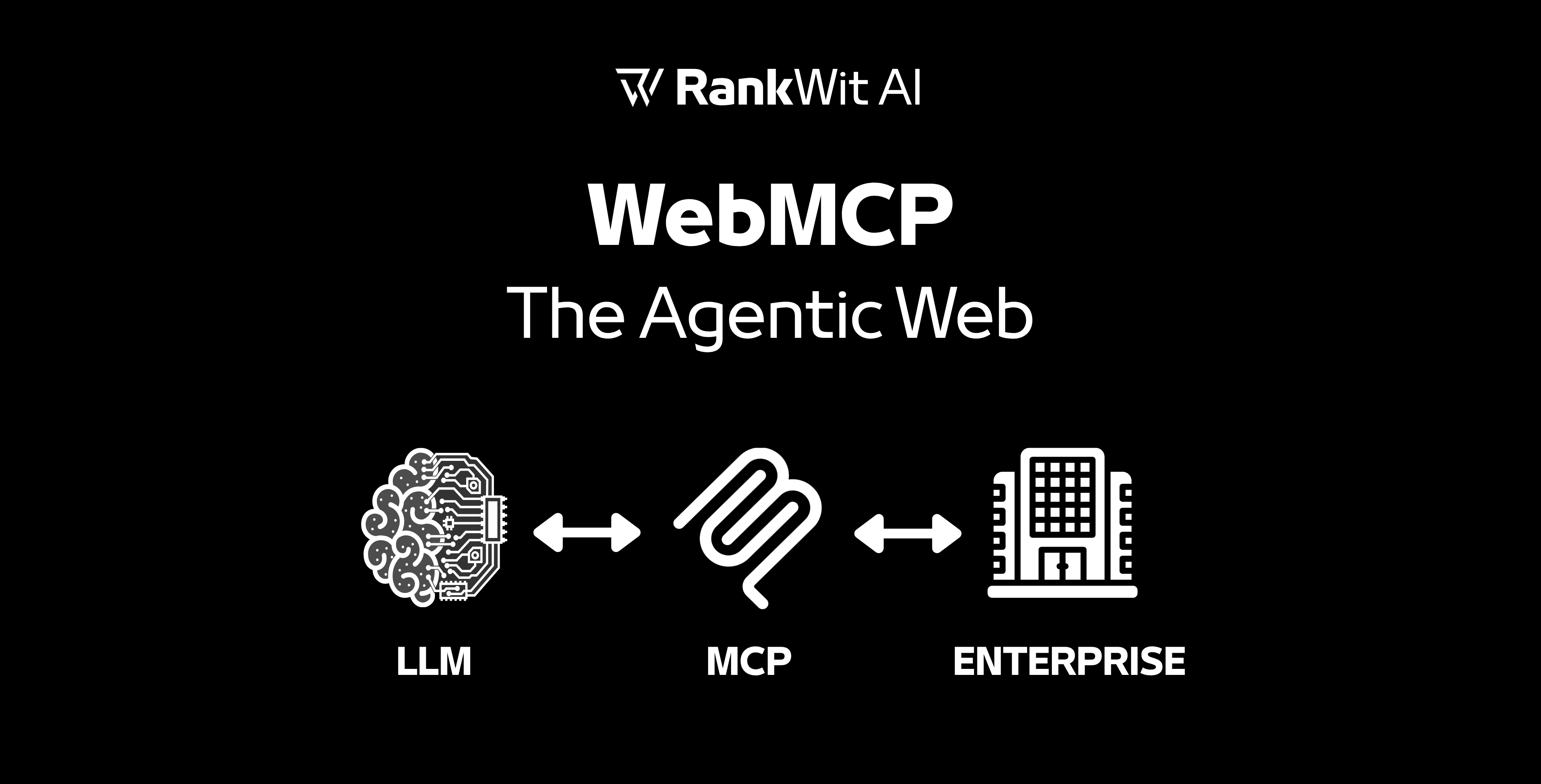
Traditional LLMs are limited by their training data "cutoff" dates. WebMCP bridges this gap by enabling Dynamic Context Injection:

  • The model identifies it needs live data (e.g., "What is the current inventory of Product X?").
  • It uses the WebMCP bidirectional channel to query the server.
  • The server returns structured data, which the AI then uses to generate an accurate, up-to-the-minute response.

Read More
ArrowArrow right blue
What key factors help content perform well in generative search engines and AI answer systems?
Arrow

Content that performs well in generative search environments is usually well-structured, informative, and built around clear topics and entities. Providing reliable information, logical content organization, and strong authority signals helps AI systems understand and reference the content more effectively.

Read More
ArrowArrow right blue

📚 Learn, Apply, Win

Stay inspired with the latest stories, tips, and insights.
Explore articles designed to spark ideas, share knowledge, and keep you updated on what’s new.