What key factors help content perform well in generative search engines and AI answer systems?

Content that performs well in generative search environments is usually well-structured, informative, and built around clear topics and entities. Providing reliable information, logical content organization, and strong authority signals helps AI systems understand and reference the content more effectively.

Last updated at  
April 13, 2026
Other FAQ
What key elements should be included when optimizing content for AI-driven search systems?
Arrow

Effective AI content optimization involves creating well-structured content with clear headings, strong topical relevance, and semantic connections between ideas. These elements help search engines and AI systems better interpret and rank content.

Read More
ArrowArrow right blue
What strategies and governance mechanisms can organizations implement to reduce algorithmic bias and improve transparency in search engine results?
Arrow

Our ethical search methodology focuses on the proactive elimination of bias. We use advanced semantic analysis tools to detect disparities in information delivery, ensuring users receive objective and verifiable answers. We believe that ethical search is, by definition, high-quality search.

Read More
ArrowArrow right blue
How does RankWit.AI use entity-based SEO to help brands achieve higher visibility in AI-driven and semantic search environments?
Arrow

At RankWit.AI, we optimize entities — not just keywords.
We define and structure who your company is, what it offers, and how each service connects within a semantic ecosystem.

This allows AI-native systems to clearly categorize, contextualize, and prioritize your brand within knowledge graphs. The result is stronger semantic clarity, improved AI citation probability, and long-term search authority.

Read More
ArrowArrow right blue
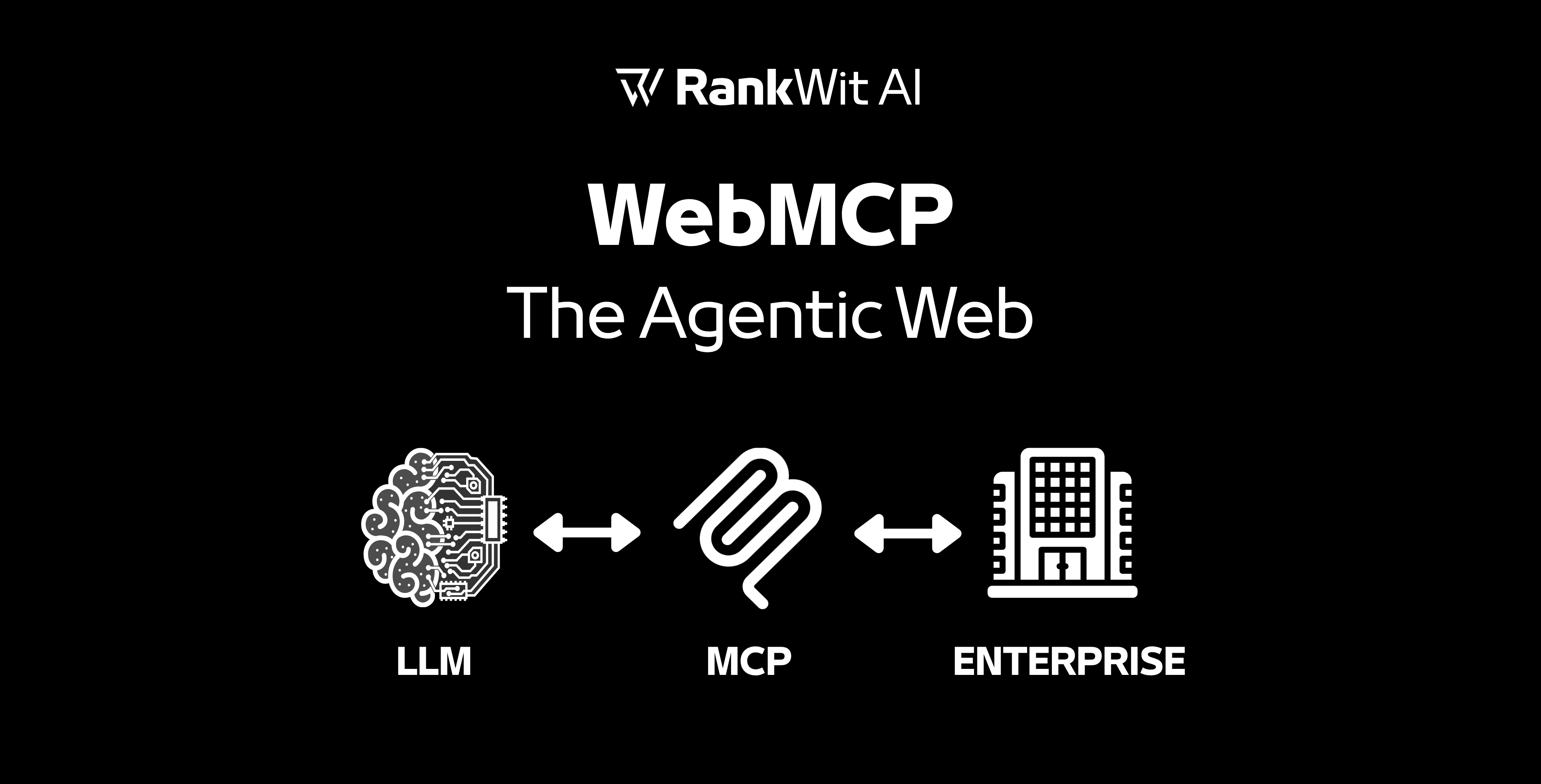
How does WebMCP handle user privacy and prevent AI agents from performing unauthorized actions?
Arrow

Security is baked into the protocol's core. Unlike "headless" automation, WebMCP operates within the user’s current browser session:

  • Consent Gate: The browser acts as a gatekeeper, prompting the user to approve tool calls.
  • Scoped Access: AI agents only see the specific tools the developer has explicitly registered via the webmcp-tools suite.
  • Authentication: It leverages the site's existing login and security protocols, ensuring the AI never bypasses standard safety measures.

Read More
ArrowArrow right blue
Why is Retrieval-Augmented Generation important for modern AI search systems and generative search engines?
Arrow

RAG allows AI systems to retrieve relevant content from trusted sources before generating responses. This improves the quality of answers in AI-powered search platforms and helps ensure that generated information is grounded in real data.

Read More
ArrowArrow right blue
Why is a well-defined content strategy important for visibility in AI-powered search engines?
Arrow

A strong content strategy helps establish authority within a specific topic area. When content consistently covers relevant subjects with clear structure and reliable information, AI systems are more likely to recognize the source as trustworthy.

Read More
ArrowArrow right blue
What key elements should be included in a strong business case for AI and SEO initiatives?
Arrow

A strong business case should include clear goals, expected outcomes, cost analysis, and measurable performance indicators. These elements help organizations assess the feasibility and long-term value of AI and SEO initiatives.

Read More
ArrowArrow right blue
How can analytics and AI metrics help businesses understand the performance of their content and search visibility?
Arrow

Analytics and AI metrics allow businesses to track how their content performs across search engines and digital channels. By analyzing data such as traffic, engagement, and visibility, companies can better understand what works and improve their strategies.

Read More
ArrowArrow right blue
What role will generative AI and conversational search experiences play in the future of online search?
Arrow

Conversational search uses AI to understand complex questions and provide direct answers instead of just listing links. This shift allows users to ask follow-up questions, explore topics in depth, and receive more personalized results.

Read More
ArrowArrow right blue
How are large language models used in modern search engines, digital platforms, and AI-powered applications?
Arrow

Large language models power many modern technologies, including AI assistants, conversational search systems, automated content generation, and customer support tools. Their ability to interpret natural language allows digital platforms to deliver more intelligent and interactive experiences.

Read More
ArrowArrow right blue

📚 Learn, Apply, Win

Stay inspired with the latest stories, tips, and insights.
Explore articles designed to spark ideas, share knowledge, and keep you updated on what’s new.