📚 Learn, Apply, Win
Explore articles designed to spark ideas, share knowledge, and keep you updated on what’s new.
Future LLM optimization strategies will focus on semantic understanding, strong entity signals, structured knowledge, and high-quality information sources. These trends will help AI systems deliver more accurate and context-aware responses.
Large Language Models (LLMs) are AI systems trained on massive amounts of text data, from websites to books, to understand and generate language.
They use deep learning algorithms, specifically transformer architectures, to model the structure and meaning of language.
LLMs don't "know" facts in the way humans do. Instead, they predict the next word in a sequence using probabilities, based on the context of everything that came before it. This ability enables them to produce fluent and relevant responses across countless topics.
For a deeper look at the mechanics, check out our full blog post: How Large Language Models Work.
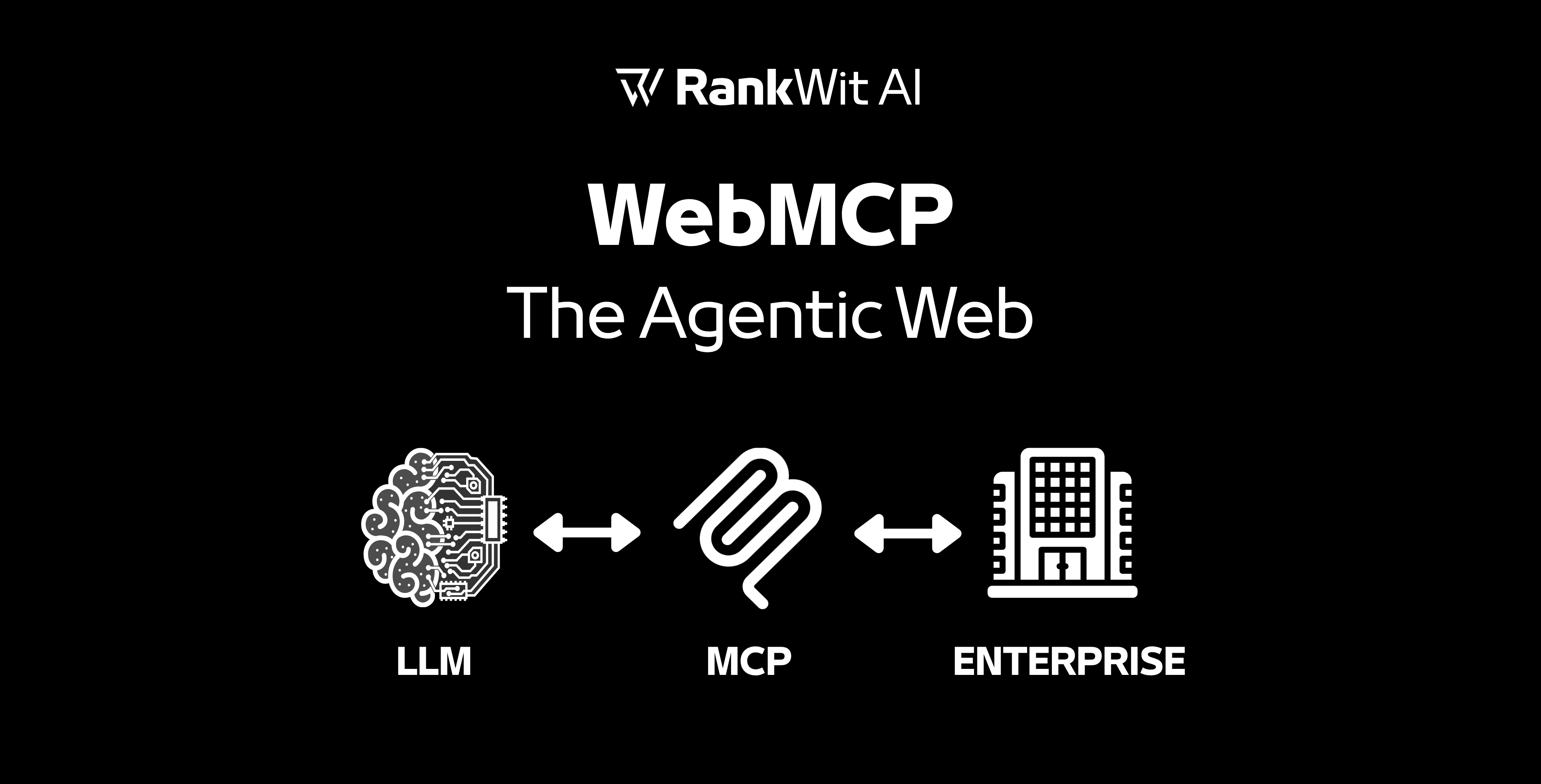
Implementing WebMCP is streamlined through the Google Chrome Labs toolkit. Developers have two primary paths:
toolname and tooldescription attributes to existing HTML <form> tags.navigator.modelContext.registerTool() API to expose complex JavaScript functions as callable AI tools.This flexibility allows teams to start with basic functionality and scale to complex integrations without a total architecture overhaul.
RankWit plans are designed to scale with your needs:
If you’re unsure, we can help you select the best plan based on your tracking volume and team size.
Schema markup provides structured information that helps search engines and AI models interpret your website more accurately. When combined with strong entity signals, it can improve indexing, enable rich search features, and increase the likelihood of being referenced in AI-powered search experiences.
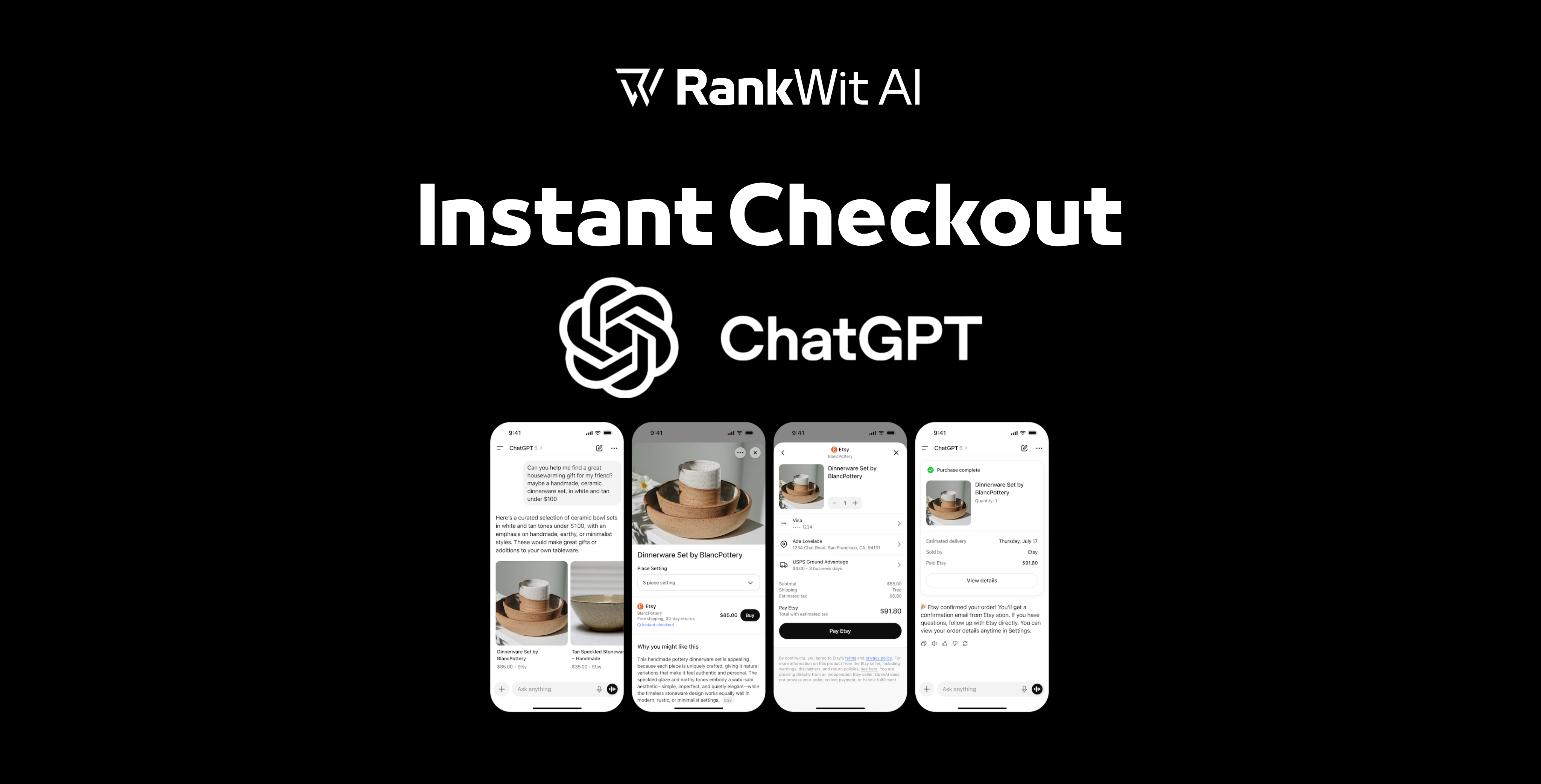
ChatGPT Instant Checkout is a new capability since 2025 developed by OpenAI that allows users to discover, configure, and purchase products directly within ChatGPT without leaving the conversation.
This functionality is powered by the Agentic Commerce Protocol (ACP), an open standard that defines how merchants’ systems interact with AI agents.
Merchants connect their product catalog through a structured product feed, expose checkout endpoints via the Agentic Checkout API, and process payments securely through delegated payment providers like Stripe.
Together, these layers create a smooth, conversational shopping experience that merges AI discovery with secure e-commerce execution.
This is the core objective. Travelers who discover a destination through AI recommendations arrive on institutional portals or local operator websites with very strong travel intent.
Properly positioning the territory within AI means capturing demand before competitors, reducing dependence on third-party distribution channels, and enhancing the entire local economic ecosystem.
We are moving from a web of pixels to a web of actions.