📚 Learn, Apply, Win
Explore articles designed to spark ideas, share knowledge, and keep you updated on what’s new.
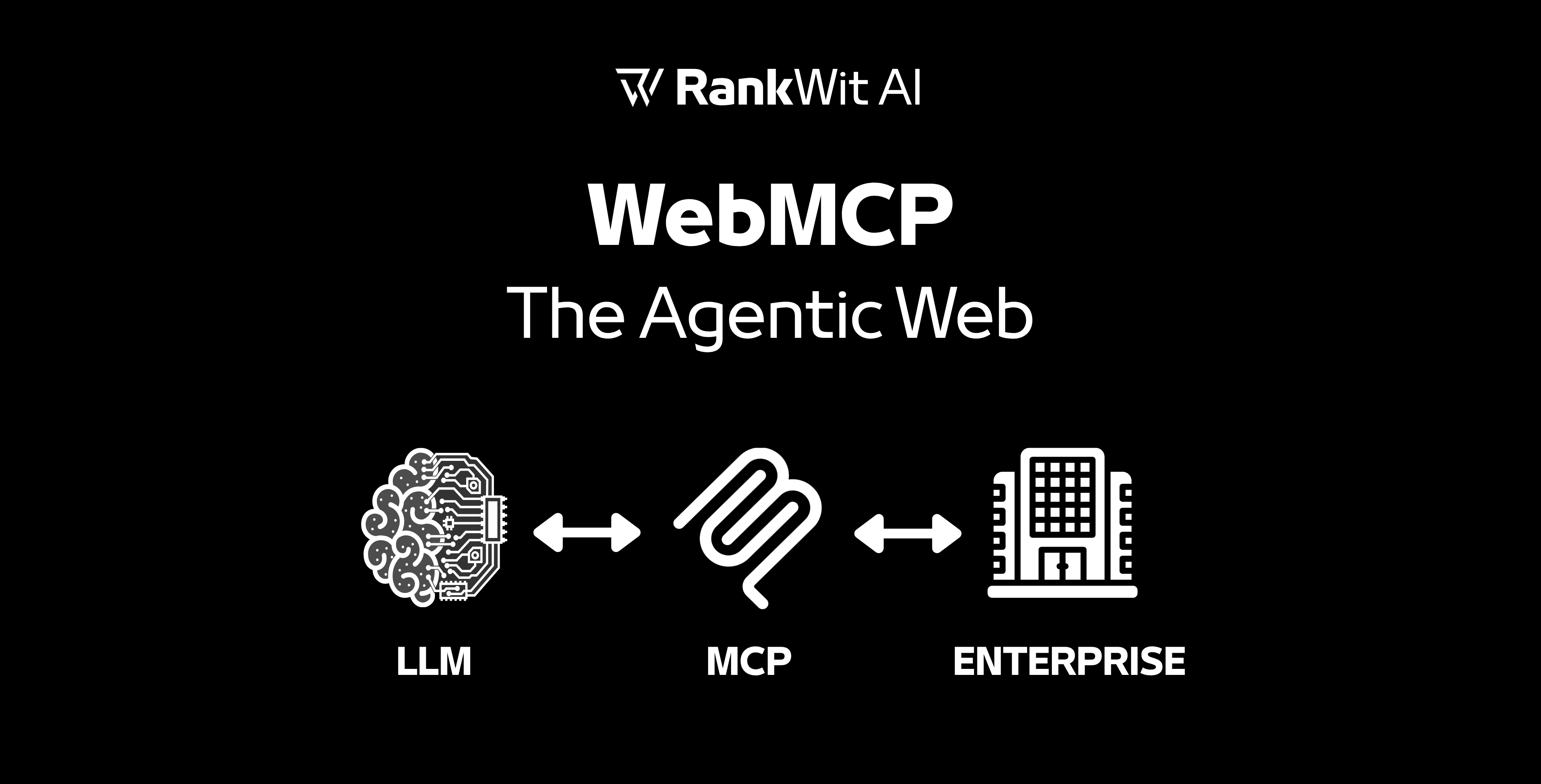
Implementing WebMCP is streamlined through the Google Chrome Labs toolkit. Developers have two primary paths:
toolname and tooldescription attributes to existing HTML <form> tags.navigator.modelContext.registerTool() API to expose complex JavaScript functions as callable AI tools.This flexibility allows teams to start with basic functionality and scale to complex integrations without a total architecture overhaul.
Training a Large Language Model involves feeding it enormous volumes of text data, from books and blogs to academic papers and web content.
This data is tokenized (split into smaller parts like words or subwords), and then processed through multiple layers of a deep learning model.
Over time, the model learns statistical relationships between words and phrases. For example, it learns that “coffee” often appears near “morning” or “caffeine.” These associations help the model generate text that feels intuitive and human.
Once the base training is done, models are often fine-tuned using additional data and human feedback to improve accuracy, tone, and usefulness. The result: a powerful tool that understands language well enough to assist with everything from SEO optimization to natural conversation.
Traditional LLMs are limited by their training data "cutoff" dates. WebMCP bridges this gap by enabling Dynamic Context Injection:
Generative Engine Optimization (GEO), also known as Large Language Model Optimization (LLMO), is the process of optimizing content to increase its visibility and relevance within AI-generated responses from tools like ChatGPT, Gemini, or Perplexity.
Unlike traditional SEO, which targets search engine rankings, GEO focuses on how large language models interpret, prioritize, and present information to users in conversational outputs. The goal is to influence how and when content appears in AI-driven answers.
Google's AI-powered Virtual Try-On is a Google Shopping feature that uses generative AI to show how a specific garment looks on a real model matching the shopper's preferences.
Users can choose from 40 models varying in:
This helps shoppers make more confident purchase decisions without visiting a physical store, solving one of the biggest friction points in online apparel shopping: uncertainty about fit and appearance.
Google reported that products with Virtual Try-On enabled received significantly higher quality engagement, meaning shoppers spent more time interacting with those listings and were more likely to take actions such as clicking through or completing a purchase.
As Google extends Virtual Try-On to additional categories, brands that participate in the program and provide standardized, high-quality product images will benefit from stronger engagement signals and greater conversion potential. This feature is a clear indicator that visual content quality is becoming a ranking factor in AI-powered shopping experiences.
Your privacy remains a priority when using Shopping Research.
ChatGPT does not send your personal information, queries, or preferences to retailers or third-party sites.
The tool simply gathers publicly available product information online, such as specifications, reviews, and prices, and organizes it into a personalized buyer’s guide for you.
You stay in full control, and no personal data is exchanged during the process.