What key elements should be included in a strong business case for AI and SEO initiatives?

A strong business case should include clear goals, expected outcomes, cost analysis, and measurable performance indicators. These elements help organizations assess the feasibility and long-term value of AI and SEO initiatives.

Last updated at  
April 13, 2026
Other FAQ
Which plan should I choose: Starter, Growth, or Enterprise?
Arrow

RankWit plans are designed to scale with your needs:

  • Starter: Best for freelancers, consultants, and small agencies beginning with AI visibility tracking.
  • Growth: Great for established agencies, marketing teams, and organizations with multiple websites.
  • Enterprise: Built for large companies needing advanced customization, higher credit volumes, and dedicated support.

If you’re unsure, we can help you select the best plan based on your tracking volume and team size.

Read More
ArrowArrow right blue
Why is academic and industry literature important for understanding developments in AI, search technologies, and digital marketing?
Arrow

Academic and industry literature offers valuable research, analysis, and expert perspectives on emerging technologies and digital strategies. Reviewing this literature helps professionals stay informed about innovations, methodologies, and best practices in AI and search optimization.

Read More
ArrowArrow right blue
What types of metrics are most useful for evaluating performance in AI-driven search environments?
Arrow

AI search performance metrics are the new frontier for digital marketers. As generative engines like Gemini and Search Generative Experience (SGE) redefine how users find information, relying solely on legacy SEO tracking is no longer enough. To succeed, you must measure how AI models perceive, rank, and cite your content.

1. Subjective ImpressionThis metric evaluates how well your content answers user queries compared to competitors. AI models assess the relevance, completeness, and accuracy of your content. A high score signifies that your content provides comprehensive answers that LLMs deem most helpful to the user.

2. Position ScoreSimilar to traditional SERP rankings, the Position Score measures how high your website ranks within the AI’s generated response. Calculated by your average ranking position (1st, 2nd, 3rd), a higher position directly correlates with increased user trust and higher click-through potential from AI citations.

3. Share of Voice (SoV)In the context of GEO, Share of Voice measures the percentage of queries where your website is mentioned or cited in the AI's response. A dominant SoV indicates broad topical authority and ensures your brand remains "top of mind" for the AI across various related search strings.

4. Consistency ScoreBecause users interact with various models (Perplexity, ChatGPT, Gemini), the Consistency Score is vital. It tracks the similarity of your rankings and mentions across multiple platforms. High consistency ensures that your brand’s authority is recognized universally, regardless of the specific AI model used.

Read More
ArrowArrow right blue
How long before we see results?
Arrow

Most hotels see measurable improvements in AI citations within 30–60 days.
Full compounding results, where AI platforms consistently recommend you for your highest-value prompts, typically emerge between 90 and 180 days, depending on your starting position and market.

Read More
ArrowArrow right blue
What types of literature are most useful for professionals working with AI-driven search and digital optimization?
Arrow

Professionals working with AI-driven search benefit from reviewing academic studies, technical papers, and industry reports. These sources provide evidence-based insights that help explain how search technologies evolve and how optimization strategies should adapt.

Read More
ArrowArrow right blue
Why is it important for websites to adapt their SEO strategies to prepare for the future of AI-driven search engines?
Arrow

As search engines integrate AI technologies, ranking factors are shifting toward content quality, semantic relevance, structured data, and entity relationships. Websites that adapt their SEO strategies to these changes are more likely to remain visible in future search environments.

Read More
ArrowArrow right blue
Is it difficult for developers to implement WebMCP on an existing website or application?
Arrow

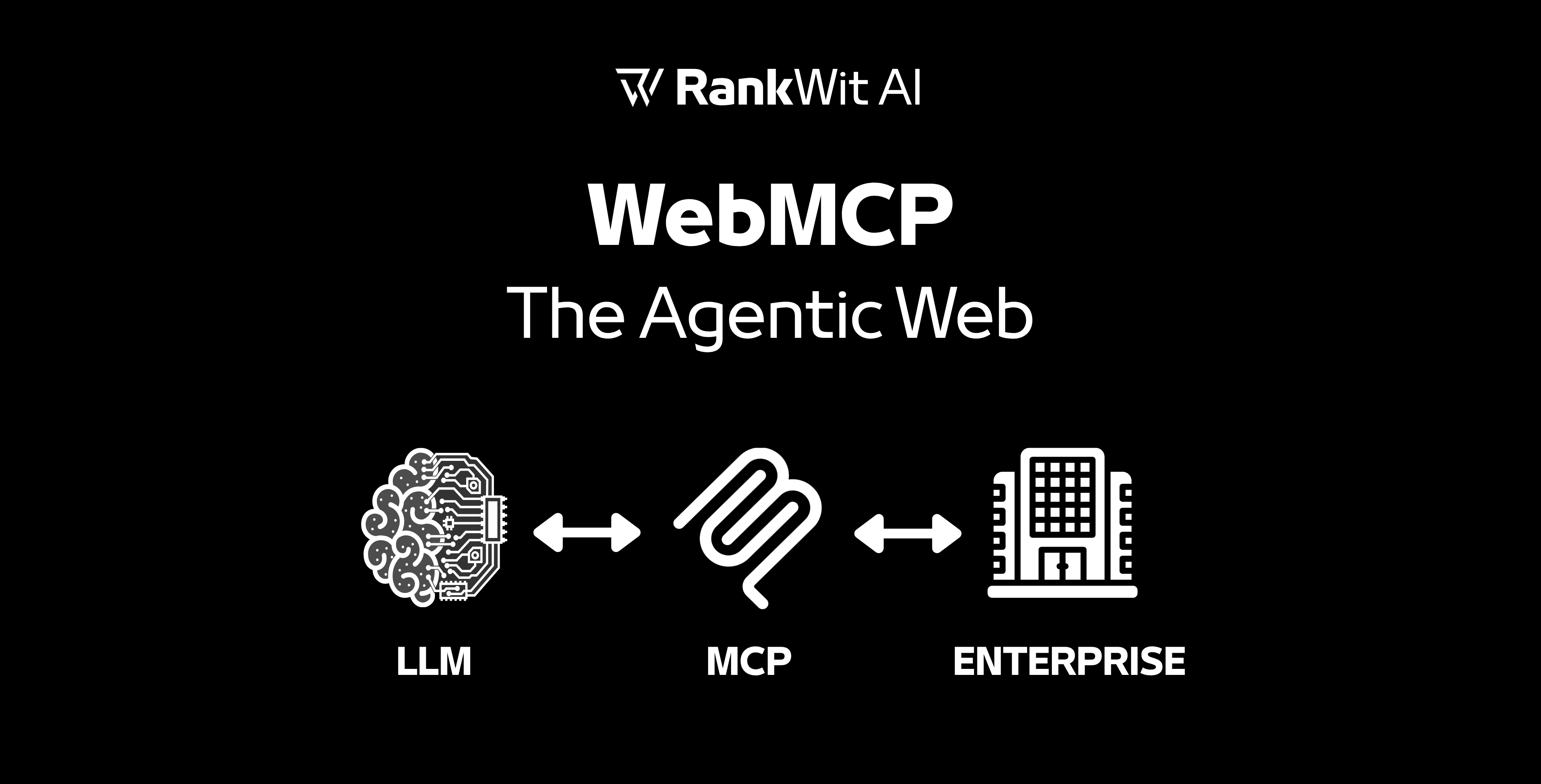
Implementing WebMCP is streamlined through the Google Chrome Labs toolkit. Developers have two primary paths:

  • Declarative: Simply add toolname and tooldescription attributes to existing HTML <form> tags.
  • Imperative: Use the navigator.modelContext.registerTool() API to expose complex JavaScript functions as callable AI tools.This flexibility allows teams to start with basic functionality and scale to complex integrations without a total architecture overhaul.

Read More
ArrowArrow right blue
Why is optimizing product data and content important for visibility in AI-powered e-commerce search systems?
Arrow

AI-powered search engines rely on structured product information, clear descriptions, and relevant attributes to interpret and categorize products. Well-optimized product data improves visibility in search results and increases the chances of products being recommended to potential buyers.

Read More
ArrowArrow right blue
What key factors help content perform well in generative search engines and AI answer systems?
Arrow

Content that performs well in generative search environments is usually well-structured, informative, and built around clear topics and entities. Providing reliable information, logical content organization, and strong authority signals helps AI systems understand and reference the content more effectively.

Read More
ArrowArrow right blue
What are the main benefits of combining traditional SEO strategies with artificial intelligence technologies?
Arrow

Combining SEO with AI technologies allows businesses to automate data analysis, uncover deeper insights, and optimize strategies faster. This integration helps improve content relevance, understand user behavior, and adapt to evolving search engine algorithms.

Read More
ArrowArrow right blue

📚 Learn, Apply, Win

Stay inspired with the latest stories, tips, and insights.
Explore articles designed to spark ideas, share knowledge, and keep you updated on what’s new.