📚 Learn, Apply, Win
Explore articles designed to spark ideas, share knowledge, and keep you updated on what’s new.
Academic and industry literature offers valuable research, analysis, and expert perspectives on emerging technologies and digital strategies. Reviewing this literature helps professionals stay informed about innovations, methodologies, and best practices in AI and search optimization.
Yes, that is the primary goal. Travelers who discover you through AI recommendations land on your official site with high intent, ready to book or visit.
For hotels, this means bypassing OTA commissions; for destinations, it means driving traffic to local ecosystems and official portals.
Often, the increase in direct, high-value traffic allows the service to pay for itself many times over.
Agentic RAG represents a new paradigm in Retrieval-Augmented Generation (RAG).
While traditional RAG retrieves information to improve the accuracy of model outputs, Agentic RAG goes a step further by integrating autonomous agents that can plan, reason, and act across multi-step workflows.
This approach allows systems to:
In other words, Agentic RAG doesn’t just provide better answers, but it strategically manages the retrieval process to support more accurate, efficient, and explainable decision-making.
Industry case studies provide real-world examples of how SEO, AI search optimization, and digital strategies perform across different sectors. They help businesses understand what works, what challenges may arise, and how similar organizations have improved their search visibility and online performance.
Generative Engine Optimization (GEO), also known as Large Language Model Optimization (LLMO), is the process of optimizing content to increase its visibility and relevance within AI-generated responses from tools like ChatGPT, Gemini, or Perplexity.
Unlike traditional SEO, which targets search engine rankings, GEO focuses on how large language models interpret, prioritize, and present information to users in conversational outputs. The goal is to influence how and when content appears in AI-driven answers.
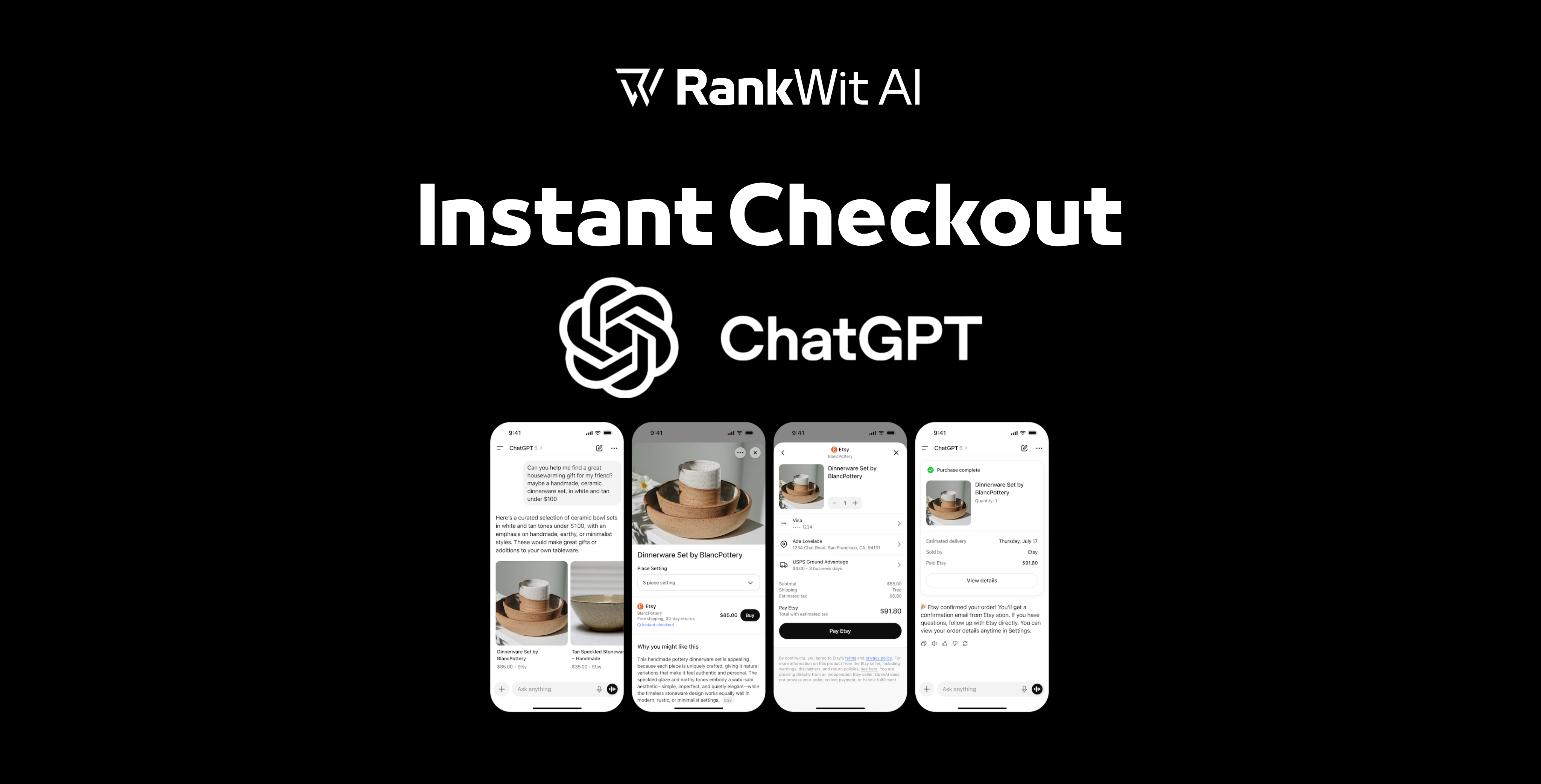
Shopping Research is a feature in ChatGPT that acts as a personalized shopping assistant.
Simply describe what you’re looking for, such as “a lightweight laptop for travel”, and ChatGPT gathers product details, reviews, specs, prices, and comparisons from the web.
You can refine the results by marking products as “Not interested” or “More like this”, helping ChatGPT understand your preferences.
At the end, you receive a custom buyer’s guide that explains the pros, cons, and trade-offs of each option, making your purchase process easier and more informed.
Your privacy remains a priority when using Shopping Research.
ChatGPT does not send your personal information, queries, or preferences to retailers or third-party sites.
The tool simply gathers publicly available product information online, such as specifications, reviews, and prices, and organizes it into a personalized buyer’s guide for you.
You stay in full control, and no personal data is exchanged during the process.