What is Generative Engine Optimization (GEO)?

Generative Engine Optimization (GEO), also known as Large Language Model Optimization (LLMO), is the process of optimizing content to increase its visibility and relevance within AI-generated responses from tools like ChatGPT, Gemini, or Perplexity.

Unlike traditional SEO, which targets search engine rankings, GEO focuses on how large language models interpret, prioritize, and present information to users in conversational outputs. The goal is to influence how and when content appears in AI-driven answers.

Last updated at  
April 13, 2026
Other FAQ
How does RankWit track AI visibility?
Arrow

RankWit gives you a complete picture of how your brand appears across major AI platforms.
We run structured prompts through leading AI systems (including ChatGPT, Google AI Overview, and Perplexity) and then evaluate the responses for:

  • Brand mentions
  • Sentiment
  • Ranking or positioning
  • Competitor visibility
  • Opportunities and risks

This analysis helps you understand exactly how AI systems perceive and present your brand.

Read More
ArrowArrow right blue
Why is AI content optimization becoming essential for businesses that want to stay competitive in search and digital marketing?
Arrow

AI content optimization enables businesses to produce more accurate, targeted, and user-focused content. By leveraging AI insights, companies can adapt their content strategies faster, improve search performance, and meet the evolving requirements of modern search engines.

Read More
ArrowArrow right blue
Can I cancel my subscription at any time?
Arrow

Yes. You can cancel your subscription, downgrade, or upgrade your plan at any time.

Read More
ArrowArrow right blue
What are the strategic differences between SaaS-based AI platforms and open-source AI models in terms of control, scalability, privacy, customization, and total cost of ownership?
Arrow

We recommend that companies transition toward hybrid solutions. While SaaS AI platforms are ideal for rapid deployment, open-source platforms are recommended for clients who require greater data sovereignty and advanced model training capabilities.

Read More
ArrowArrow right blue
How does the "Shop Similar" feature work inside Google's AI-powered search results?
Arrow

The "Shop Similar" feature is one of the most commercially significant additions to Google's Search Generative Experience. It bridges the gap between inspiration and purchase in a single, seamless flow.

Here's how it works:

  1. A user searches for a product or generates an AI image of what they want.
  2. Google's system analyzes the visual and semantic attributes of that image.
  3. Matching real products from the Shopping Graph appear immediately below, including pricing, seller information, ratings, and product photos.

The user never needs to reformulate their query, run a reverse image search, or navigate to a separate shopping tab. The entire journey, from idea to purchasable product, happens within the search interface.

Key distinction: The matching logic is visual and semantic, not purely keyword-driven. This means that the quality and accuracy of product imagery now plays a direct role in whether a product appears in these AI-matched results.

What this means for retailers: Products that are well-represented in Google's Shopping Graph, with accurate metadata, competitive pricing, and high-resolution imagery, are far more likely to be surfaced. Brands that invest in structured product data and visual quality will have a measurable advantage in this new shopping experience.

Read More
ArrowArrow right blue
Why does GEO matter now?
Arrow

Generative Engine Optimization (GEO) is becoming increasingly critical as user behavior shifts toward AI-native search tools like ChatGPT, Gemini, and Perplexity.
According with Bain, recent data shows that over 40% of users now prefer AI-generated answers over traditional search engine results.
This trend reflects a major evolution in how people discover and consume information.

Unlike traditional SEO, which focuses on ranking in static search results, GEO ensures that your content is understandable, relevant, and authoritative enough to be cited or surfaced in LLM-generated responses.
This is especially important as AI platforms begin to integrate live web search capabilities, summaries, and citations directly into their answers.

The urgency is amplified by user traffic trends. According to Similarweb data (see chart below), ChatGPT visits are projected to surpass Google’s by December 2026 if current growth continues.
This suggests that visibility in LLMs may soon be as important—if not more—than traditional search rankings.

Projection based on traffic from the last 6 months (source: Similarweb US).

Read More
ArrowArrow right blue
How are RankWit credits calculated?
Arrow

Credits determine how much AI tracking you perform.
A single credit = 1 prompt × 1 AI model.

For example:

  • 10 prompts
  • × 3 AI models (ChatGPT, Google AI Overview, Perplexity)
    = 30 credits

This transparent system ensures you only pay for the tracking you use.

Read More
ArrowArrow right blue
How are large language models used in modern search engines, digital platforms, and AI-powered applications?
Arrow

Large language models power many modern technologies, including AI assistants, conversational search systems, automated content generation, and customer support tools. Their ability to interpret natural language allows digital platforms to deliver more intelligent and interactive experiences.

Read More
ArrowArrow right blue
How do large language models actually work, and why does that matter for GEO?
Arrow

Large Language Models (LLMs) like GPT are trained on vast amounts of text data to learn the patterns, structures, and relationships between words. At their core, they predict the next word in a sequence based on what came before—enabling them to generate coherent, human-like language.

This matters for GEO (Generative Engine Optimization) because it means your content must be:

  • Well-structured so LLMs can interpret and reuse it effectively.
  • Clear and specific, as models rely on patterns to make accurate predictions.
  • Contextually rich, because LLMs use surrounding context to generate responses.

By understanding how LLMs “think,” businesses can optimize content not just for humans or search engines—but for the AI models that are becoming the new discovery layer.

Bottom line: If your content helps the model predict the right answer, GEO helps users find you.

Read More
ArrowArrow right blue
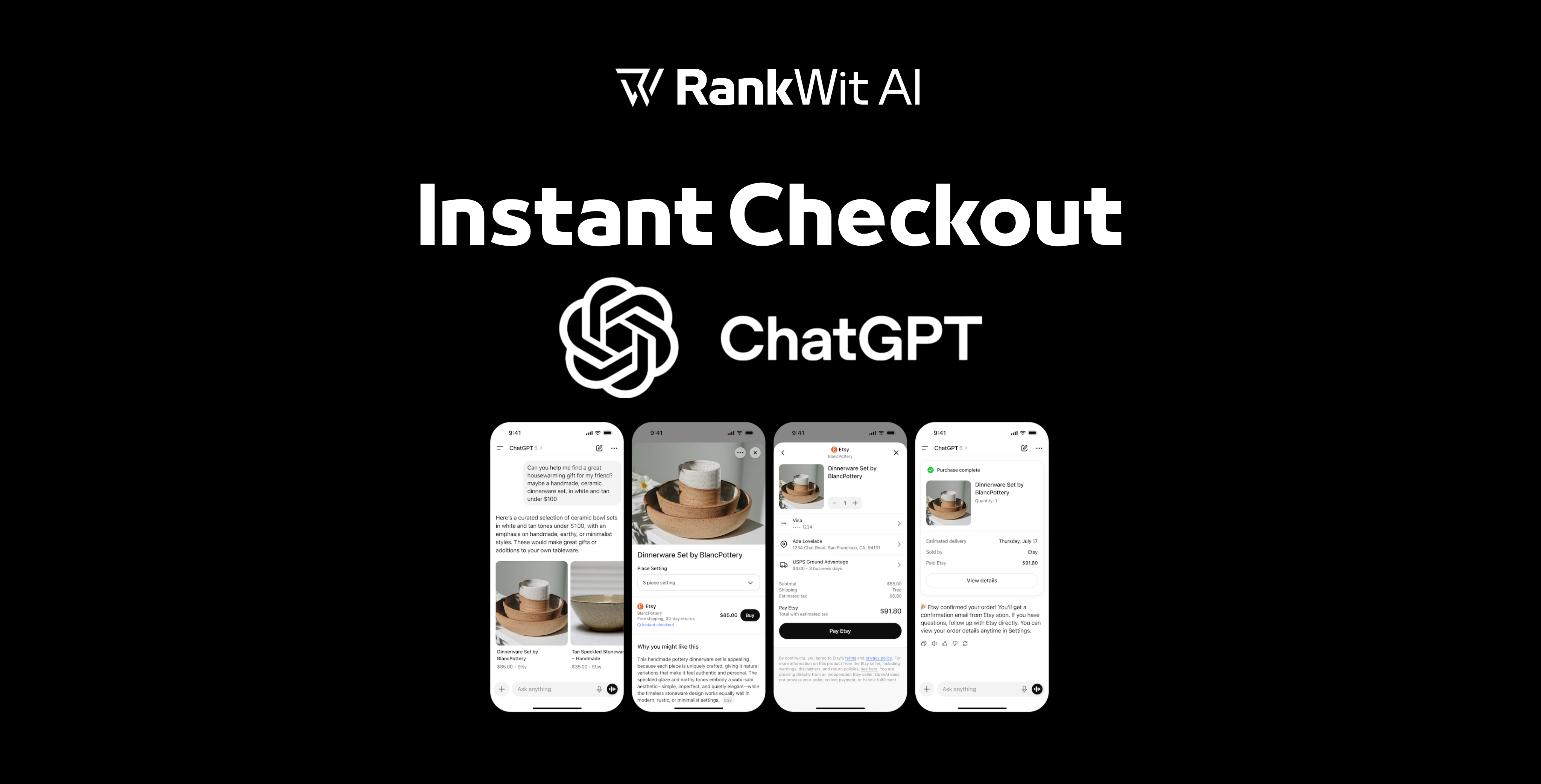
What is ChatGPT Shopping Research and how does it work?
Arrow

Shopping Research is a feature in ChatGPT that acts as a personalized shopping assistant.
Simply describe what you’re looking for, such as “a lightweight laptop for travel”, and ChatGPT gathers product details, reviews, specs, prices, and comparisons from the web.

You can refine the results by marking products as “Not interested” or “More like this”, helping ChatGPT understand your preferences.

At the end, you receive a custom buyer’s guide that explains the pros, cons, and trade-offs of each option, making your purchase process easier and more informed.

Read More
ArrowArrow right blue

📚 Learn, Apply, Win

Stay inspired with the latest stories, tips, and insights.
Explore articles designed to spark ideas, share knowledge, and keep you updated on what’s new.