What is ChatGPT Shopping Research and how does it work?

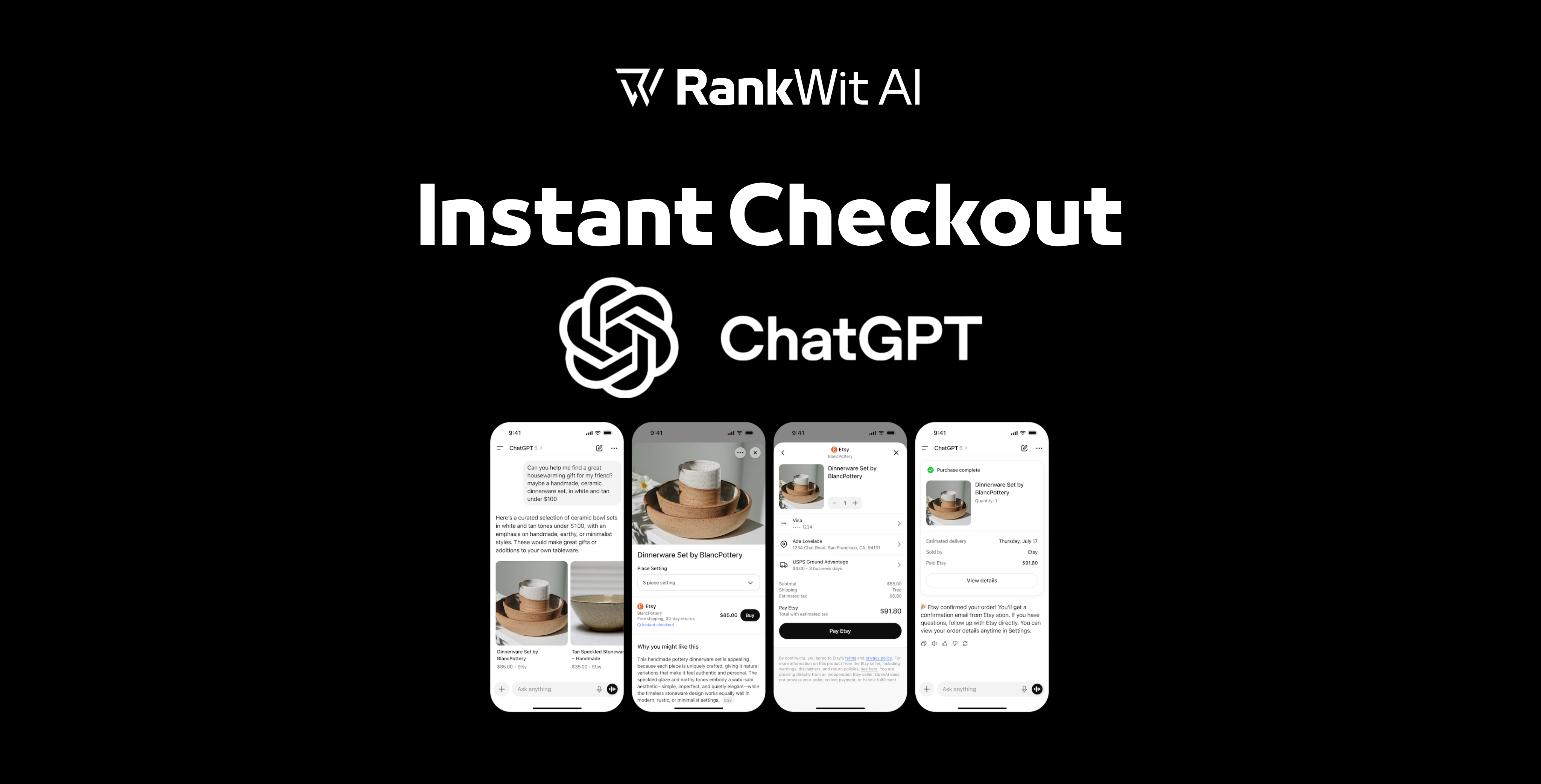
Shopping Research is a feature in ChatGPT that acts as a personalized shopping assistant.
Simply describe what you’re looking for, such as “a lightweight laptop for travel”, and ChatGPT gathers product details, reviews, specs, prices, and comparisons from the web.

You can refine the results by marking products as “Not interested” or “More like this”, helping ChatGPT understand your preferences.

At the end, you receive a custom buyer’s guide that explains the pros, cons, and trade-offs of each option, making your purchase process easier and more informed.

Last updated at  
April 13, 2026
Other FAQ
How can companies use business cases to justify investments in AI-driven search and digital optimization?
Arrow

Businesses use business cases to evaluate the potential impact of adopting AI technologies and search optimization strategies. By analyzing costs, expected improvements, and measurable results, companies can make informed decisions about implementing new digital initiatives.

Read More
ArrowArrow right blue
What role will generative AI and conversational search experiences play in the future of online search?
Arrow

Conversational search uses AI to understand complex questions and provide direct answers instead of just listing links. This shift allows users to ask follow-up questions, explore topics in depth, and receive more personalized results.

Read More
ArrowArrow right blue
How is GEO different from SEO?
Arrow

GEO (Generative Engine Optimization) is not a rebrand of SEO—it’s a response to an entirely new environment. SEO optimizes for bots that crawl, index, and rank. GEO optimizes for large language models (LLMs) that read, learn, and generate human-like answers.

While SEO is built around keywords and backlinks, GEO is about semantic clarity, contextual authority, and conversational structuring. You're not trying to please an algorithm—you’re helping an AI understand and echo your ideas accurately in its responses. It's not just about being found—it's about being spoken for.

Read More
ArrowArrow right blue
How do optimization techniques help enhance the performance of large language models in real-world applications?
Arrow

Optimization techniques allow large language models to perform more efficiently by improving how they process data and generate responses. These improvements can lead to faster processing times, better accuracy, and more reliable results in practical applications.

Read More
ArrowArrow right blue
What is Google's Generative AI Shopping, and how does it change the way people search for products?
Arrow

Google's Generative AI Shopping is a set of capabilities within Google's Search Generative Experience (SGE) that transforms product discovery from a keyword-based process into a visual, conversational one.

Instead of scrolling through pages of blue links, users can now:

  • Describe what they want in plain language (e.g., "colorful metallic puffer jacket") and receive AI-generated photorealistic images that match their description.
  • Refine results conversationally, adjusting details like color, pattern, or style with follow-up prompts.
  • Browse shoppable products that visually match the generated images, pulled directly from Google's Shopping Graph, a dataset of over 35 billion product listings updated in real time.

This approach is particularly powerful for apparel and fashion, where traditional keyword search often fails to capture the specificity of what a shopper has in mind. According to Google's internal data, 20% of apparel queries are five words or longer, a type of search that generative AI handles far more effectively than conventional engines.

Why it matters for GEO: Content and product listings that are well-structured, semantically rich, and paired with high-quality imagery are more likely to be surfaced in these AI-generated shopping results. Optimizing for this new discovery layer is now a core part of any AI visibility strategy.

Read More
ArrowArrow right blue
What is LLM optimization and how does it help content become more understandable for large language models?
Arrow

LLM optimization involves structuring and writing content so large language models can easily understand, process, and reference it. This includes clear explanations, logical structure, semantic context, and reliable information that AI systems can interpret accurately.

Read More
ArrowArrow right blue
How does RankWit.AI use entity-based SEO to help brands achieve higher visibility in AI-driven and semantic search environments?
Arrow

At RankWit.AI, we optimize entities — not just keywords.
We define and structure who your company is, what it offers, and how each service connects within a semantic ecosystem.

This allows AI-native systems to clearly categorize, contextualize, and prioritize your brand within knowledge graphs. The result is stronger semantic clarity, improved AI citation probability, and long-term search authority.

Read More
ArrowArrow right blue
Why is academic and industry literature important for understanding developments in AI, search technologies, and digital marketing?
Arrow

Academic and industry literature offers valuable research, analysis, and expert perspectives on emerging technologies and digital strategies. Reviewing this literature helps professionals stay informed about innovations, methodologies, and best practices in AI and search optimization.

Read More
ArrowArrow right blue
How are large language models transforming the way search engines process information and deliver results to users?
Arrow

Large language models allow search engines to better understand natural language queries and context. Instead of only matching keywords, these systems can interpret meaning, summarize information, and generate more comprehensive answers for users.

Read More
ArrowArrow right blue
What’s the difference between GEO and AEO?
Arrow

Generative Engine Optimization (GEO) and Answer Engine Optimization (AEO) are closely related strategies, but they serve different purposes in how content is discovered and used by AI technologies.

  • AEO is focused on helping your content become the direct answer to user queries in AI-powered answer engines like Google's SGE (Search Generative Experience), Bing, or voice assistants. It emphasizes clear formatting, Q&A structure, and schema markup so that AI systems can easily extract and present your content in snippets or spoken responses.
  • GEO, on the other hand, is a broader approach designed to ensure your content is used, synthesized, or cited by generative AI models like ChatGPT, Gemini, Claude, and Perplexity. It involves creating high-quality, authoritative content that large language models (LLMs) recognize as trustworthy and relevant. It may also include using metadata tools (like llms.txt) to guide how AI systems interpret and prioritize your content.
In short:
AEO helps you be the answer in AI search results. GEO helps you be the source that generative AI platforms trust and cite.

Together, these strategies are essential for maximizing visibility in an AI-first search landscape.

Read More
ArrowArrow right blue

📚 Learn, Apply, Win

Stay inspired with the latest stories, tips, and insights.
Explore articles designed to spark ideas, share knowledge, and keep you updated on what’s new.