How can businesses integrate artificial intelligence into their SEO strategies to improve search performance and digital visibility?

Integrating AI into SEO allows businesses to analyze large datasets, identify search trends, and optimize content more efficiently. AI tools can support keyword research, content optimization, and performance analysis, helping companies improve their search visibility.

Last updated at  
April 13, 2026
Other FAQ
How is artificial intelligence transforming the future of search engines and the way users discover information online?
Arrow

Artificial intelligence is transforming search from simple keyword matching to understanding intent, context, and relationships between topics. AI-powered systems can generate answers, summarize information, and connect multiple sources, changing how users discover and interact with content online.

Read More
ArrowArrow right blue
How will large language model optimization evolve as AI-powered search engines and generative systems continue to advance?
Arrow

As AI systems continue to evolve, LLM optimization will increasingly prioritize clear information structure, entity relationships, and trustworthy sources. Content that provides accurate, well-organized knowledge will be more likely to be interpreted and referenced by future AI models.

Read More
ArrowArrow right blue
How can I optimize for GEO?
Arrow

GEO requires a shift in strategy from traditional SEO. Instead of focusing solely on how search engines crawl and rank pages, Generative Engine Optimization (GEO) focuses on how Large Language Models (LLMs) like ChatGPT, Gemini, or Claude understand, retrieve, and reproduce information in their answers.

To make this easier to implement, we can apply the three classic pillars of SEO—Semantic, Technical, and Authority/Links—reinterpreted through the lens of GEO.

1. Semantic Optimization (Text & Content Layer)

This refers to the language, structure, and clarity of the content itself—what you write and how you write it.

🧠 GEO Tactics:

  • Conversational Clarity: Use natural, question-answer formats that match how users interact with LLMs.
  • RAG-Friendly Layouts: Structure content so that models using Retrieval-Augmented Generation can easily locate and summarize it.
  • Authoritative Tone: Avoid vague or overly promotional language—LLMs favor clear, factual statements.
  • Structured Headers: Use H2s and H3s to define sections. LLMs rely heavily on this hierarchy for context segmentation.

🔍 Compared to Traditional SEO:

  • Similarity: Both value clarity, keyword-rich subheadings, and topic coverage.
  • Difference: GEO prioritizes contextual relevance and direct answers over keyword stuffing or search volume targeting.

2. Technical Optimization

This pillar deals with how your content is coded, delivered, and accessed—not just by humans, but by AI models too.

⚙️ GEO Tactics:

  • Structured Data (Schema Markup): Clearly define entities and relationships so LLMs can understand context.
  • Crawlability & Load Time: Still important, especially when LLMs like ChatGPT or Perplexity use live browsing.
  • Model-Friendly Formats: Prefer clean HTML, markdown, or plaintext—avoid heavy JavaScript that can block content visibility.
  • Zero-Click Readiness: Craft summaries and paragraphs that can stand alone, knowing the user may never visit your site.

🔍 Compared to Traditional SEO:

  • Similarity: Both benefit from clean code, fast performance, and schema markup.
  • Difference: GEO focuses on how readable and usable your content is for AI, not just browsers.

3. Authority & Link Strategy

This refers to the signals of trust that tell a model—or a search engine—that your content is reliable.

🔗 GEO Tactics:

  • Credible Sources: Reference reliable, third-party data (.gov, .edu, research papers). LLMs often echo content from trusted domains.
  • Internal Linking: Connect related content pieces to help LLMs understand topic depth and relationships.
  • Brand Mentions: Even unlinked brand citations across the web may boost your perceived credibility in LLMs’ training and inference models.

🔍 Compared to Traditional SEO:

  • Similarity: Both reward strong domain reputation and high-quality references.
  • Difference: GEO may rely more on accuracy and perceived authority across training data than on backlink volume or anchor text.

Read More
ArrowArrow right blue
What types of literature are most useful for professionals working with AI-driven search and digital optimization?
Arrow

Professionals working with AI-driven search benefit from reviewing academic studies, technical papers, and industry reports. These sources provide evidence-based insights that help explain how search technologies evolve and how optimization strategies should adapt.

Read More
ArrowArrow right blue
Can I cancel my subscription at any time?
Arrow

Yes. You can cancel your subscription, downgrade, or upgrade your plan at any time.

Read More
ArrowArrow right blue
What is Agentic RAG?
Arrow

Agentic RAG represents a new paradigm in Retrieval-Augmented Generation (RAG).

While traditional RAG retrieves information to improve the accuracy of model outputs, Agentic RAG goes a step further by integrating autonomous agents that can plan, reason, and act across multi-step workflows.

This approach allows systems to:

  • Break down complex problems into smaller steps.
  • Decide dynamically which sources to retrieve and when.
  • Optimize workflows in real time for tasks such as legal reasoning, enterprise automation, or scientific research.

In other words, Agentic RAG doesn’t just provide better answers, but it strategically manages the retrieval process to support more accurate, efficient, and explainable decision-making.

Read More
ArrowArrow right blue
How can Rankwit help my business integrate with ChatGPT’s Agentic Commerce Protocol?
Arrow

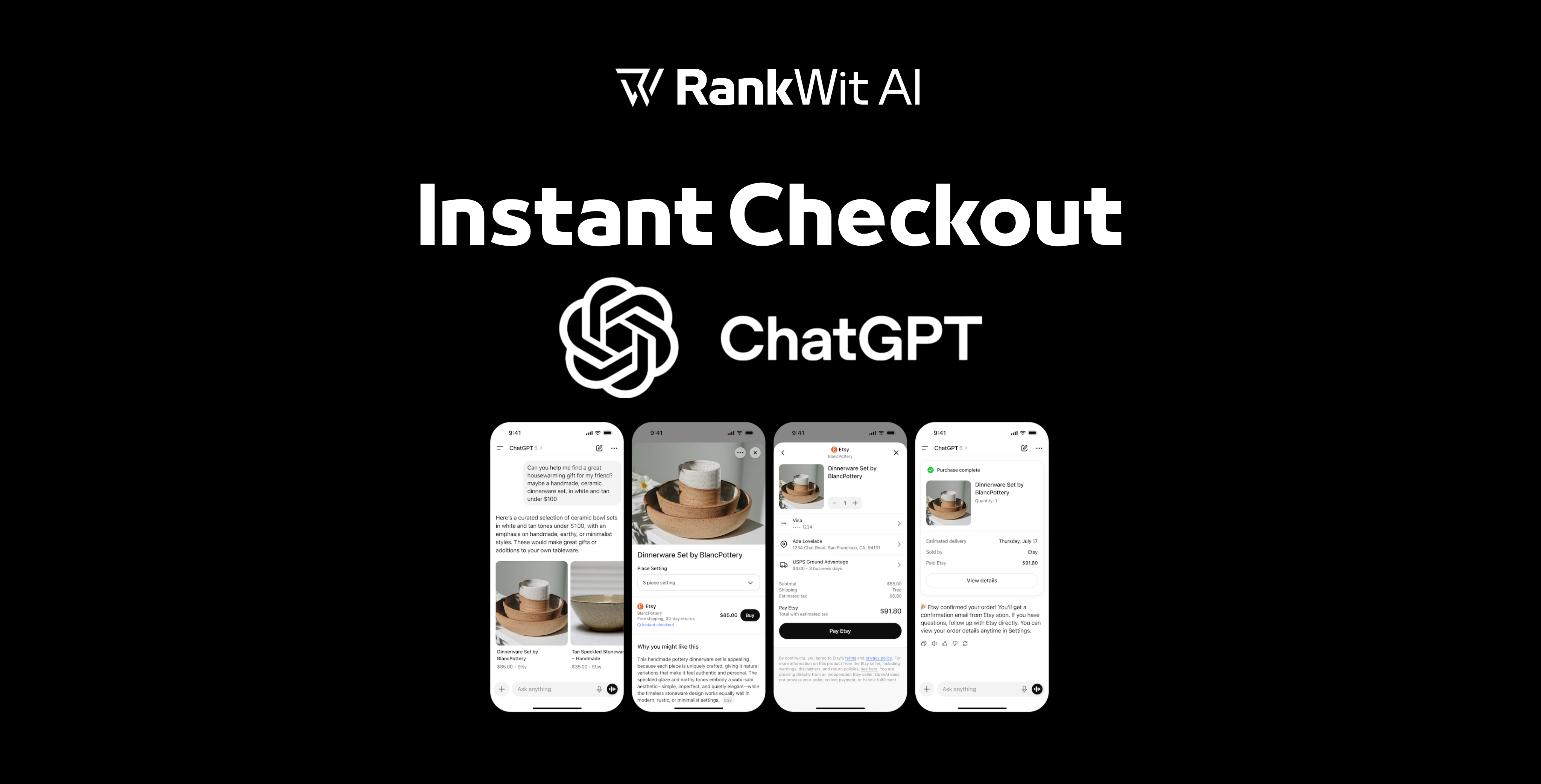
At Rankwit, we specialize in helping merchants take advantage of OpenAI’s Agentic Commerce Protocol (ACP).
Our team manages the entire integration lifecycle, from mapping your product catalog to OpenAI’s structured feed specification, to building the checkout API endpoints and connecting secure payment providers like Stripe.

By partnering with Rankwit, your business can:

  • Launch AI-powered conversational shopping experiences inside ChatGPT.
  • Achieve full compliance with OpenAI and PCI DSS standards.
  • Gain an unfair competitive advantage by adopting this technology before it becomes mainstream.

We tailor solutions to both enterprise and custom e-commerce platforms, ensuring a scalable and future-ready architecture.

Read More
ArrowArrow right blue
What is AI governance in search engines?
Arrow

AI governance in search engines refers to the rules, policies, and practices that ensure artificial intelligence systems operate in a fair, transparent, safe, and responsible way. It includes managing data use, reducing bias, protecting user privacy, and making sure search results are accurate and trustworthy.

Read More
ArrowArrow right blue
What role does WebMCP play in Retrieval-Augmented Generation (RAG) and real-time search?
Arrow

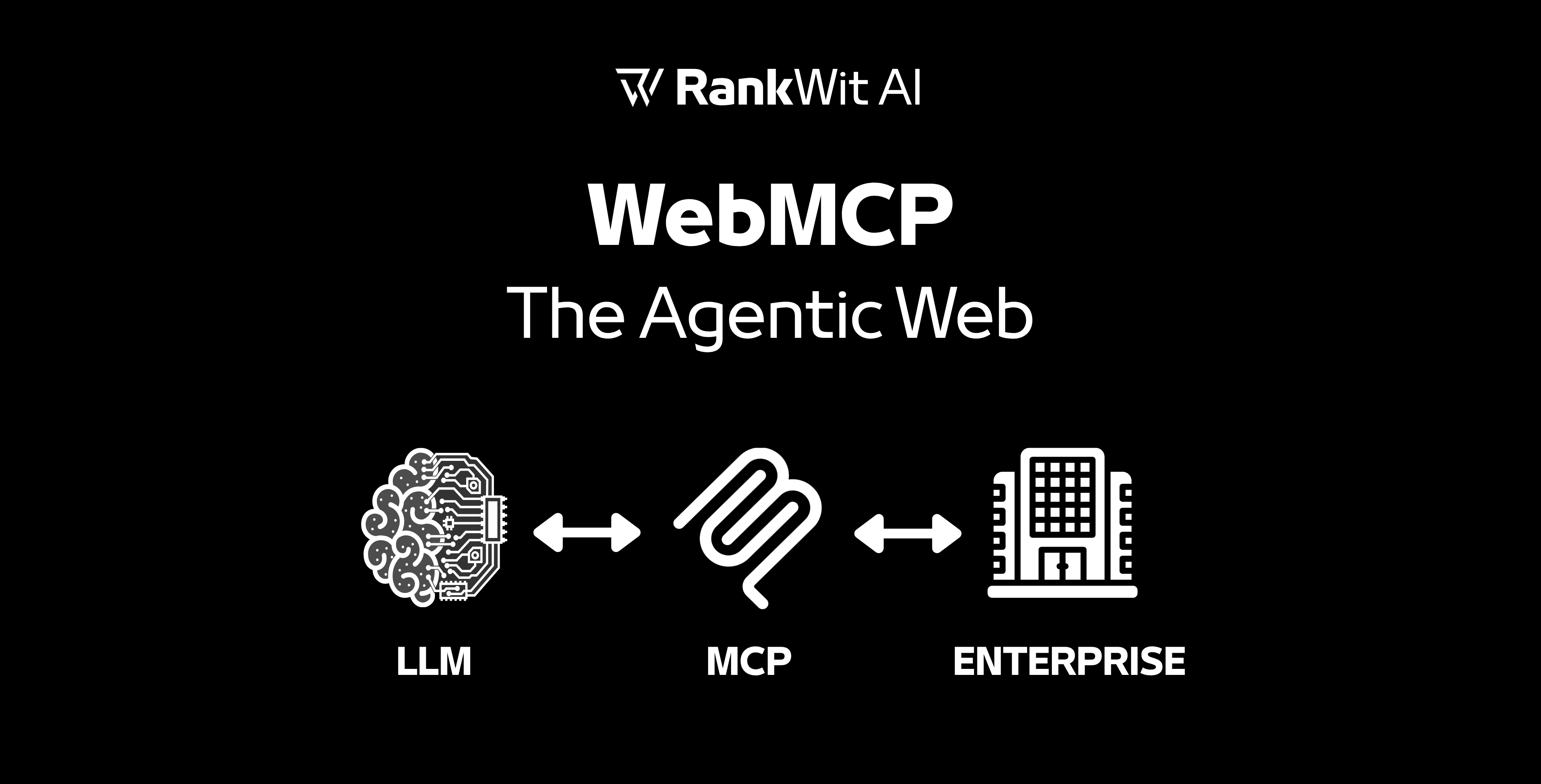
Traditional LLMs are limited by their training data "cutoff" dates. WebMCP bridges this gap by enabling Dynamic Context Injection:

  • The model identifies it needs live data (e.g., "What is the current inventory of Product X?").
  • It uses the WebMCP bidirectional channel to query the server.
  • The server returns structured data, which the AI then uses to generate an accurate, up-to-the-minute response.

Read More
ArrowArrow right blue
What key trends are shaping the future of search engines as large language models become more widely integrated?
Arrow

As large language models become integrated into search engines, major trends include conversational search interfaces, AI-generated summaries, deeper semantic understanding, and more personalized results. These changes are redefining how users interact with search platforms.

Read More
ArrowArrow right blue

📚 Learn, Apply, Win

Stay inspired with the latest stories, tips, and insights.
Explore articles designed to spark ideas, share knowledge, and keep you updated on what’s new.