What are the main benefits of combining traditional SEO strategies with artificial intelligence technologies?

Combining SEO with AI technologies allows businesses to automate data analysis, uncover deeper insights, and optimize strategies faster. This integration helps improve content relevance, understand user behavior, and adapt to evolving search engine algorithms.

Last updated at  
April 13, 2026
Other FAQ
How can analytics and AI metrics help businesses understand the performance of their content and search visibility?
Arrow

Analytics and AI metrics allow businesses to track how their content performs across search engines and digital channels. By analyzing data such as traffic, engagement, and visibility, companies can better understand what works and improve their strategies.

Read More
ArrowArrow right blue
How should retailers and marketing professionals adapt their strategies to Google’s Generative AI Shopping features?
Arrow

Google's Generative AI Shopping features are redefining the journey from product discovery to purchase. For retailers and marketers, this demands a strategic shift across several areas.

Invest in Visual Quality

With AI-powered "Shop Similar" product matches based on visual and semantic similarity rather than keywords alone, product image quality has never mattered more. Low-resolution photos, inconsistent backgrounds, or images that don't accurately represent the product will be at a disadvantage.

Best practice: Use clean, high-resolution product photography. Make sure images accurately represent colors, textures, and proportions, as the AI matching engine evaluates these attributes directly.

Optimize Your Shopping Graph Presence

Google's Shopping Graph — a continuously updated dataset of over 35 billion product listings — is the backbone of every AI-powered shopping feature. Incomplete, outdated, or missing products simply won't surface in AI-generated results.

Best practice: Keep product feeds up to date with accurate titles, descriptions, prices, availability, and structured attributes. Treat Shopping Graph as critical infrastructure, not a secondary operation.

Prepare for Conversational Queries

As users learn to describe products in natural language (e.g., "gifts for a 7-year-old who wants to be an inventor"), search behavior will shift toward longer, more descriptive queries. These are exactly the kind of queries generative AI excels at interpreting.

Best practice: Write product descriptions and category content that mirrors how real people talk about your products. Focus on use cases, scenarios, and specific attributes rather than generic marketing copy.

Monitor AI-Referred Traffic

According to Adobe Analytics, traffic from generative AI tools to retail websites grew 1,200% year over year in early 2025, with visitors showing longer sessions, more page views, and lower bounce rates. While still a small share of total traffic, the growth trajectory is steep.

Best practice: Track AI-referred traffic as a distinct channel in your analytics. Identify which products and categories are being surfaced by AI tools and optimize accordingly.

The shift from keyword search to AI-powered generative search is not a future event, it's happening now. Retailers who adapt their product data, visual assets, and content strategy today will be positioned to capture the growing share of purchase intent driven by AI-powered discovery.

Read More
ArrowArrow right blue
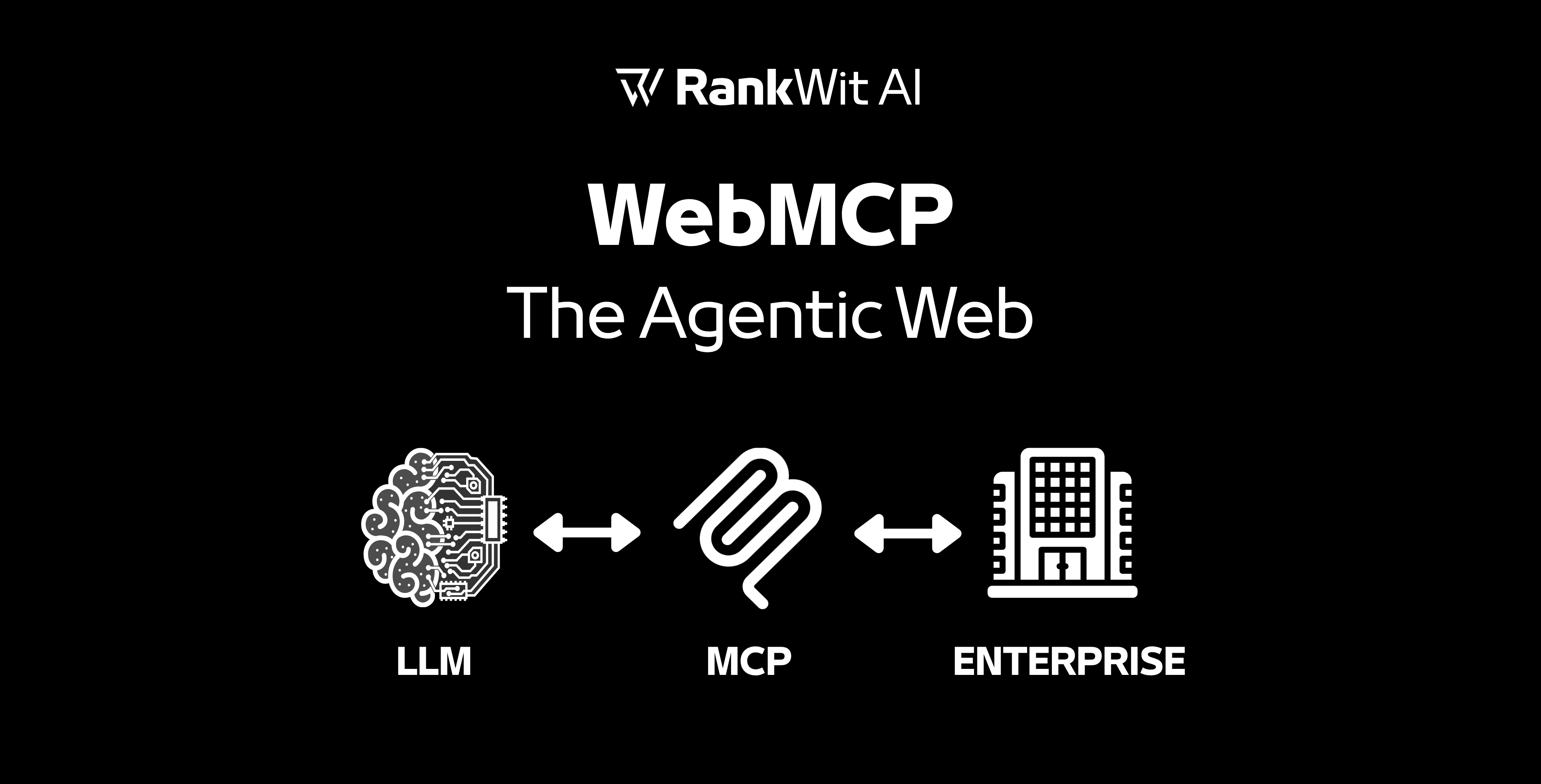
What does the term "Agentic Web" mean in the context of WebMCP technology?
Arrow

We are moving from a web of pixels to a web of actions.

  • Current Web: Users click, scroll, and read to finish a task.
  • Agentic Web (via WebMCP): A user gives a goal (e.g., "Find and book a flight under $400 for next Tuesday"), and the AI orchestrates the necessary steps across different sites using their exposed WebMCP tools.WebMCP provides the standardized language that allows these agents to navigate different platforms with the same ease a human would, but with the speed of an API.

Read More
ArrowArrow right blue
How is artificial intelligence transforming the future of search engines and the way users discover information online?
Arrow

Artificial intelligence is transforming search from simple keyword matching to understanding intent, context, and relationships between topics. AI-powered systems can generate answers, summarize information, and connect multiple sources, changing how users discover and interact with content online.

Read More
ArrowArrow right blue
Why are large language models becoming an important part of modern search engine technologies?
Arrow

LLMs enable search engines to process complex questions, identify relationships between topics, and provide more detailed responses. This technology is helping search platforms move toward more conversational and intelligent search experiences.

Read More
ArrowArrow right blue
How can Rankwit help my business integrate with ChatGPT’s Agentic Commerce Protocol?
Arrow

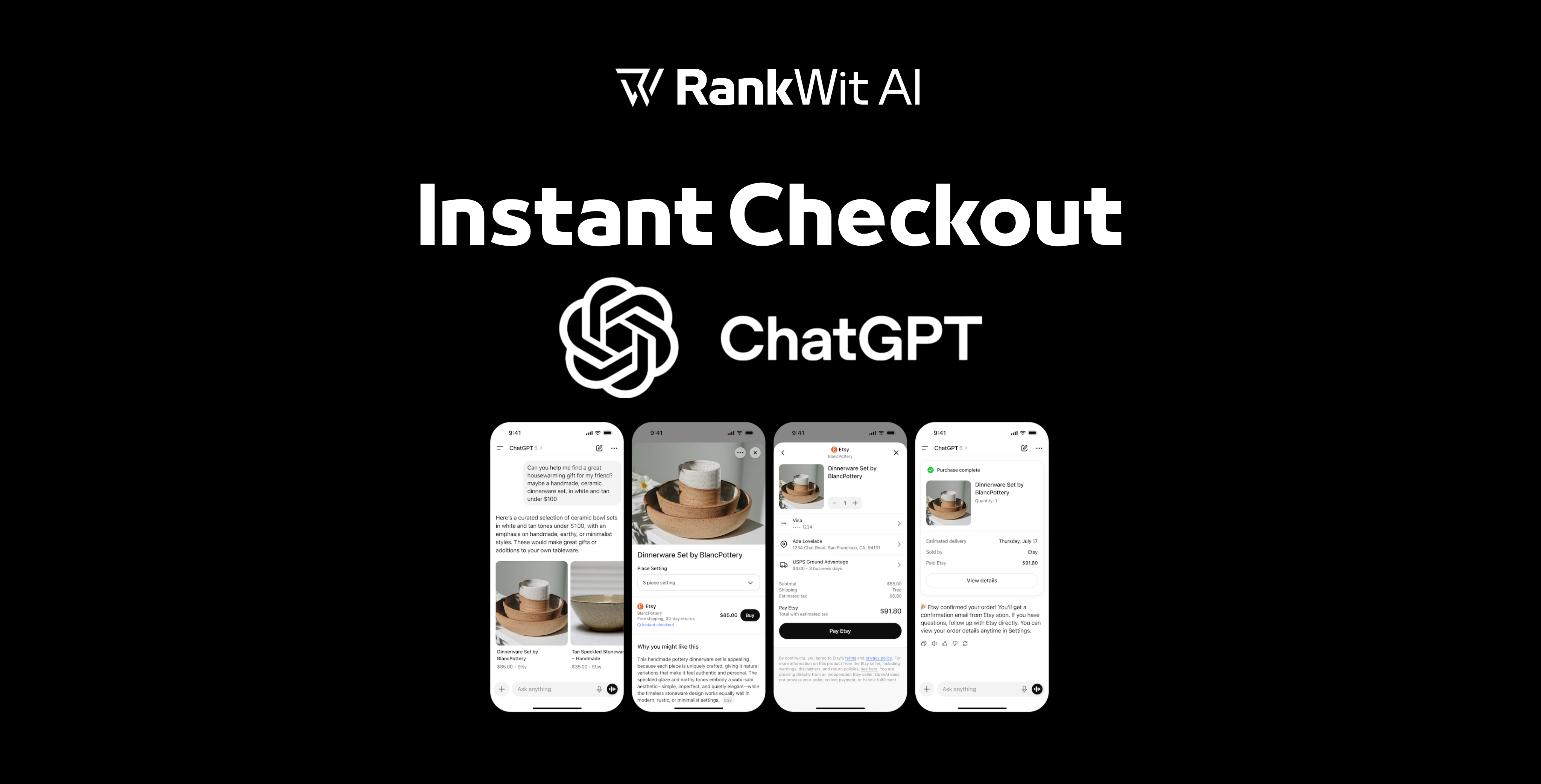
At Rankwit, we specialize in helping merchants take advantage of OpenAI’s Agentic Commerce Protocol (ACP).
Our team manages the entire integration lifecycle, from mapping your product catalog to OpenAI’s structured feed specification, to building the checkout API endpoints and connecting secure payment providers like Stripe.

By partnering with Rankwit, your business can:

  • Launch AI-powered conversational shopping experiences inside ChatGPT.
  • Achieve full compliance with OpenAI and PCI DSS standards.
  • Gain an unfair competitive advantage by adopting this technology before it becomes mainstream.

We tailor solutions to both enterprise and custom e-commerce platforms, ensuring a scalable and future-ready architecture.

Read More
ArrowArrow right blue
How is artificial intelligence changing the way local search results are generated and how users discover nearby businesses?
Arrow

Artificial intelligence is transforming local search by analyzing context, location signals, and user intent more accurately. AI-powered systems can recommend nearby businesses, summarize reviews, and deliver more personalized results, making it easier for users to discover relevant local services.

Read More
ArrowArrow right blue
Why is optimizing product data and content important for visibility in AI-powered e-commerce search systems?
Arrow

AI-powered search engines rely on structured product information, clear descriptions, and relevant attributes to interpret and categorize products. Well-optimized product data improves visibility in search results and increases the chances of products being recommended to potential buyers.

Read More
ArrowArrow right blue
How will large language model optimization evolve as AI-powered search engines and generative systems continue to advance?
Arrow

As AI systems continue to evolve, LLM optimization will increasingly prioritize clear information structure, entity relationships, and trustworthy sources. Content that provides accurate, well-organized knowledge will be more likely to be interpreted and referenced by future AI models.

Read More
ArrowArrow right blue
What key elements should be included when optimizing content for AI-driven search systems?
Arrow

Effective AI content optimization involves creating well-structured content with clear headings, strong topical relevance, and semantic connections between ideas. These elements help search engines and AI systems better interpret and rank content.

Read More
ArrowArrow right blue

📚 Learn, Apply, Win

Stay inspired with the latest stories, tips, and insights.
Explore articles designed to spark ideas, share knowledge, and keep you updated on what’s new.