How long does setup take?

Setup takes only a few minutes.
Just add your website, configure your prompts and RankWit begins analyzing your AI visibility immediately.

Last updated at  
April 13, 2026
Other FAQ
What are common mistakes in Generative Engine Optimization (GEO)?
Arrow

As businesses and content creators begin adapting to Generative Engine Optimization, it's crucial to recognize that strategies effective in traditional SEO don’t always translate to success with AI-driven search models like ChatGPT, Gemini, or Perplexity.

In fact, certain classic SEO practices can actually reduce your visibility in AI-generated answers.

In traditional SEO, the use of targeted keywords, often repeated strategically across headers, metadata, and body content, is a foundational tactic.
This approach helps search engine crawlers associate pages with specific queries, and has long been used to improve rankings on platforms like Google and Bing.

However, in the context of GEO, keyword stuffing and rigid repetition can backfire. indeed, Large Language Models (LLMs) are not keyword matchers, but they are pattern recognizers that prioritize natural, contextual, and semantically rich language.
When content is overly optimized and lacks a conversational or human tone, it becomes less appealing for AI models to cite or summarize.
Worse, it may signal to the model that the content is promotional or unnatural, leading to it being deprioritized in AI-generated responses.

ℹ️ Best Practice: Instead of focusing on exact-match keywords, create content that mirrors how real users ask questions. Use plain, fluent language and focus on fully answering likely user intents in a natural tone.

Moreover, while E-E-A-T (Experience, Expertise, Authority, Trustworthiness) has gained importance in SEO, it’s often still possible to rank SEO pages with minimal authority if technical and content signals are strong. This is less true in GEO.

LLMs are trained to surface and reference content that demonstrates a high degree of trustworthiness. They favor sources that reflect real-world experience, subject-matter expertise, and institutional authority. Content without clear authorship, lacking credentials, or failing to convey reliability may be ignored by LLMs, even if it’s optimized in other ways.

ℹ️ Best Practice: Build content that clearly communicates why your organization or author is credible. Include bios, cite credentials, and demonstrate hands-on knowledge. For health, finance, or scientific topics, link to institutional or peer-reviewed sources to reinforce authority.


In addition, in traditional SEO, especially in long-tail keyword spaces, some websites can rank with minimal sourcing or citations, particularly when competing against weak content. However, GEO demands higher factual rigor.
LLMs are designed to summarize and synthesize trusted data. They tend to skip over content that lacks citation, includes speculative claims, or refers to ambiguous sources.

Moreover, AI models have been trained on vast amounts of data from academic, journalistic, and institutional sources. This training impacts which sites and sources the models tend to favor when generating answers. Content without strong sourcing is less likely to be cited or retrieved via Retrieval-Augmented Generation (RAG) processes.

ℹ️ Best Practice: Always back your claims with authoritative, up-to-date sources. Link to original studies, well-known publications, or government and academic institutions. Inline citations and linked references increase your content’s reliability from an LLM’s perspective.

In short, while there is some overlap between SEO and GEO, optimizing for AI models requires a distinct strategy. The focus shifts from gaming algorithmic ranking systems to ensuring clarity, credibility, and accessibility for intelligent systems that mimic human understanding. To succeed in GEO, it's not enough to be visible to search engines—you must also be comprehensible, trustworthy, and useful to AI.

Read More
ArrowArrow right blue
How is the destination’s presence on Artificial Intelligence platforms monitored?
Arrow

We run target prompts from potential tourists on all major AI platforms (weekly) and track exactly where, how, and why your destination is mentioned.

You will receive a live dashboard showing:

  • Your AI Share of Voice compared to competing destinations
  • Citation trends across different territorial assets (culture, food, outdoor)
  • Which search intents are driving interest toward the territory

Read More
ArrowArrow right blue
How can artificial intelligence be used to optimize digital content for better visibility in modern search engines and AI-driven search platforms?
Arrow

Artificial intelligence can analyze large amounts of data to identify content gaps, keyword opportunities, and user intent patterns. By using AI tools and insights, businesses can optimize their content structure, clarity, and relevance to improve visibility in both traditional and AI-powered search results.

Read More
ArrowArrow right blue
How does WebMCP handle user privacy and prevent AI agents from performing unauthorized actions?
Arrow

Security is baked into the protocol's core. Unlike "headless" automation, WebMCP operates within the user’s current browser session:

  • Consent Gate: The browser acts as a gatekeeper, prompting the user to approve tool calls.
  • Scoped Access: AI agents only see the specific tools the developer has explicitly registered via the webmcp-tools suite.
  • Authentication: It leverages the site's existing login and security protocols, ensuring the AI never bypasses standard safety measures.

Read More
ArrowArrow right blue
How does AI help marketers and SEO professionals make better optimization decisions?
Arrow

AI systems can process large amounts of search data to identify patterns, opportunities, and potential improvements. These insights help marketers and SEO professionals make more informed decisions when optimizing content and digital strategies.

Read More
ArrowArrow right blue
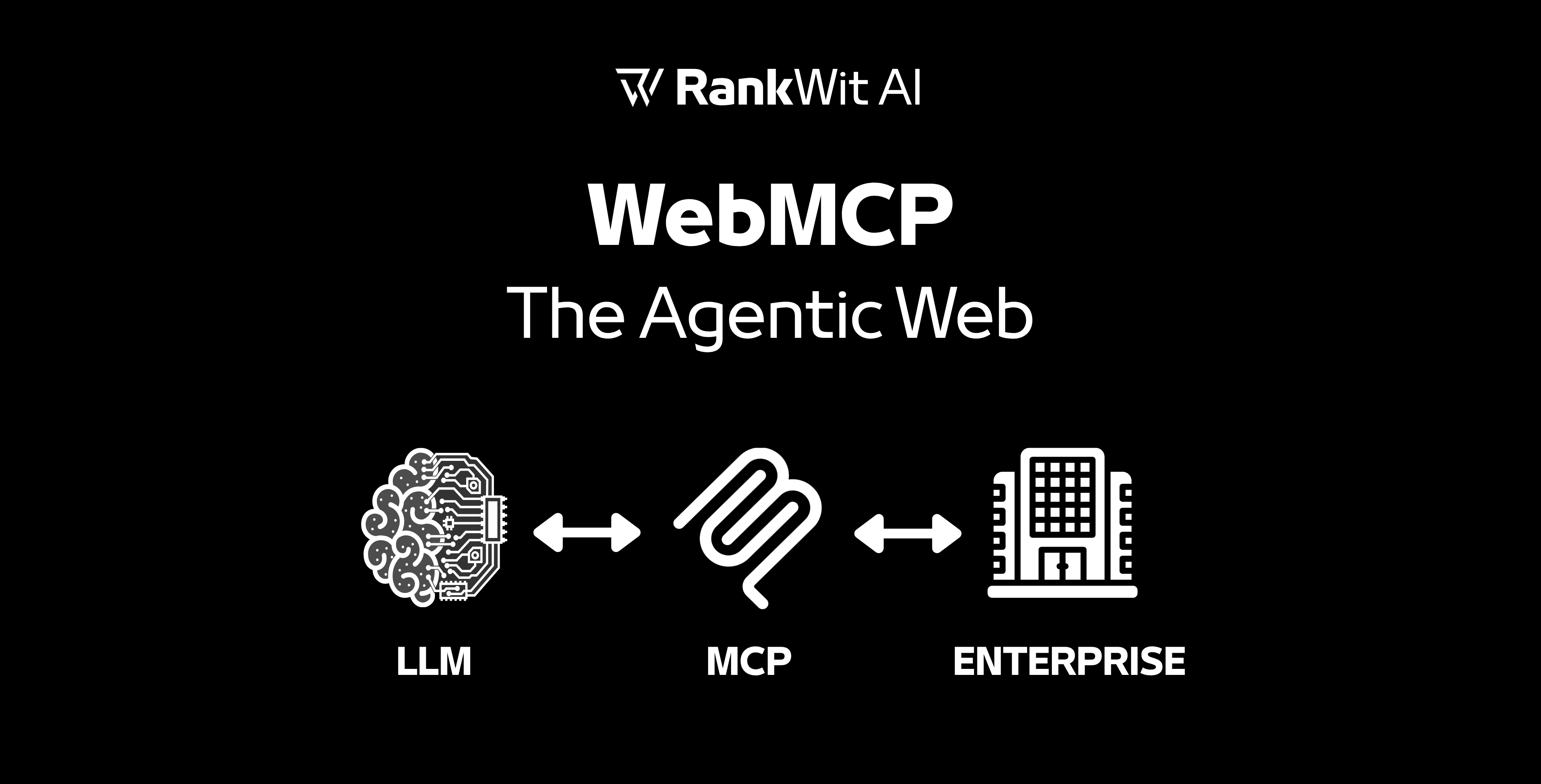
What does the term "Agentic Web" mean in the context of WebMCP technology?
Arrow

We are moving from a web of pixels to a web of actions.

  • Current Web: Users click, scroll, and read to finish a task.
  • Agentic Web (via WebMCP): A user gives a goal (e.g., "Find and book a flight under $400 for next Tuesday"), and the AI orchestrates the necessary steps across different sites using their exposed WebMCP tools.WebMCP provides the standardized language that allows these agents to navigate different platforms with the same ease a human would, but with the speed of an API.

Read More
ArrowArrow right blue
What strategies help improve how large language models retrieve and interpret website content?
Arrow

Content optimized for LLMs should include clear headings, well-organized information, and strong semantic relationships between topics. Providing accurate and structured information helps language models retrieve and use content more effectively.

Read More
ArrowArrow right blue
How does RankWit.ai handle Brand Mentions to help monitor and optimize my brand presence across the web, and what steps are involved in tracking, prioritizing, and acting on mentions to improve SEO and reputation?
Arrow

**Brand Mentions that drive action.** RankWit.ai continuously monitors the web for mentions of your brand, products, and campaigns across sources like news, blogs, forums, and social media. Each mention is analyzed for sentiment, authority, and relevance, so you can see not just where you’re discussed, but how it affects SEO and brand health.

**What you get:**
- **Real-time detection** of new mentions across a broad publisher set.
- **Sentiment and context** analysis to understand tone and potential risk or opportunity.
- **Impact ranking** that prioritizes high-value mentions by engagement potential, source credibility, and audience size.
- **Topic enrichment** to surface related keywords and content angles for optimization.
- **Alerts and digests** so you stay informed without noise.

**How to use Brand Mentions effectively**
1. **Set your brand and product keywords** to ensure comprehensive coverage.
2. **Filter by sentiment, platform, and authority** to focus on the signals that matter most.
3. **Action directly from the platform**: draft outreach, respond to feedback, or create content based on real conversations.
4. **Leverage insights for SEO**: identify backlink opportunities and topical gaps to strengthen content strategy.
5. **Track trends over time** to spot seasonal spikes and measure the impact of campaigns.

**Workflow quick-start**: enable Brand Mentions, configure keywords, set thresholds, and connect to your CRM or CMS for rapid response. For a guided tour, visit our [Try it now](/features) page and see Brand Mentions in action.

Read More
ArrowArrow right blue
What are the strategic differences between SaaS-based AI platforms and open-source AI models in terms of control, scalability, privacy, customization, and total cost of ownership?
Arrow

We recommend that companies transition toward hybrid solutions. While SaaS AI platforms are ideal for rapid deployment, open-source platforms are recommended for clients who require greater data sovereignty and advanced model training capabilities.

Read More
ArrowArrow right blue
How does RankWit monitor whether my brand is being cited in AI answers?
Arrow

RankWit continuously scans generative AI engines like ChatGPT, Gemini, and Perplexity to see if, when, and how your content is referenced. We then aggregate this data into an easy-to-read dashboard, showing:

  • Which platforms are citing your brand
  • The types of questions where you appear
  • How your visibility changes over time
    This monitoring ensures you know exactly where your brand is gaining traction—or losing ground—within AI-driven discovery.

Read More
ArrowArrow right blue

📚 Learn, Apply, Win

Stay inspired with the latest stories, tips, and insights.
Explore articles designed to spark ideas, share knowledge, and keep you updated on what’s new.