How does RankWit monitor whether my brand is being cited in AI answers?

RankWit continuously scans generative AI engines like ChatGPT, Gemini, and Perplexity to see if, when, and how your content is referenced. We then aggregate this data into an easy-to-read dashboard, showing:

  • Which platforms are citing your brand
  • The types of questions where you appear
  • How your visibility changes over time
    This monitoring ensures you know exactly where your brand is gaining traction—or losing ground—within AI-driven discovery.

Last updated at  
April 13, 2026
Other FAQ
Which generative AI tools deliver the greatest productivity gains for business teams in content creation, software development, automation, and data analysis?
Arrow

Our AI-driven product selection focuses on eliminating operational bottlenecks. We implement solutions that enable creative and technical teams to automate documentation and data analysis, allowing them to focus on high-level strategy and innovation.

Read More
ArrowArrow right blue
How does AI optimization affect the attractiveness of the territory and tourist flows?
Arrow

This is the core objective. Travelers who discover a destination through AI recommendations arrive on institutional portals or local operator websites with very strong travel intent.

Properly positioning the territory within AI means capturing demand before competitors, reducing dependence on third-party distribution channels, and enhancing the entire local economic ecosystem.

Read More
ArrowArrow right blue
What export formats are available?
Arrow

RankWit makes reporting simple.
You can export all tracking data in multiple formats, including:

  • PDF
  • CSV
  • Word documents
  • Custom reporting templates

This makes sharing insights with clients or leadership fast and flexible.

Read More
ArrowArrow right blue
What key elements should be included in a strong business case for AI and SEO initiatives?
Arrow

A strong business case should include clear goals, expected outcomes, cost analysis, and measurable performance indicators. These elements help organizations assess the feasibility and long-term value of AI and SEO initiatives.

Read More
ArrowArrow right blue
How will large language model optimization evolve as AI-powered search engines and generative systems continue to advance?
Arrow

As AI systems continue to evolve, LLM optimization will increasingly prioritize clear information structure, entity relationships, and trustworthy sources. Content that provides accurate, well-organized knowledge will be more likely to be interpreted and referenced by future AI models.

Read More
ArrowArrow right blue
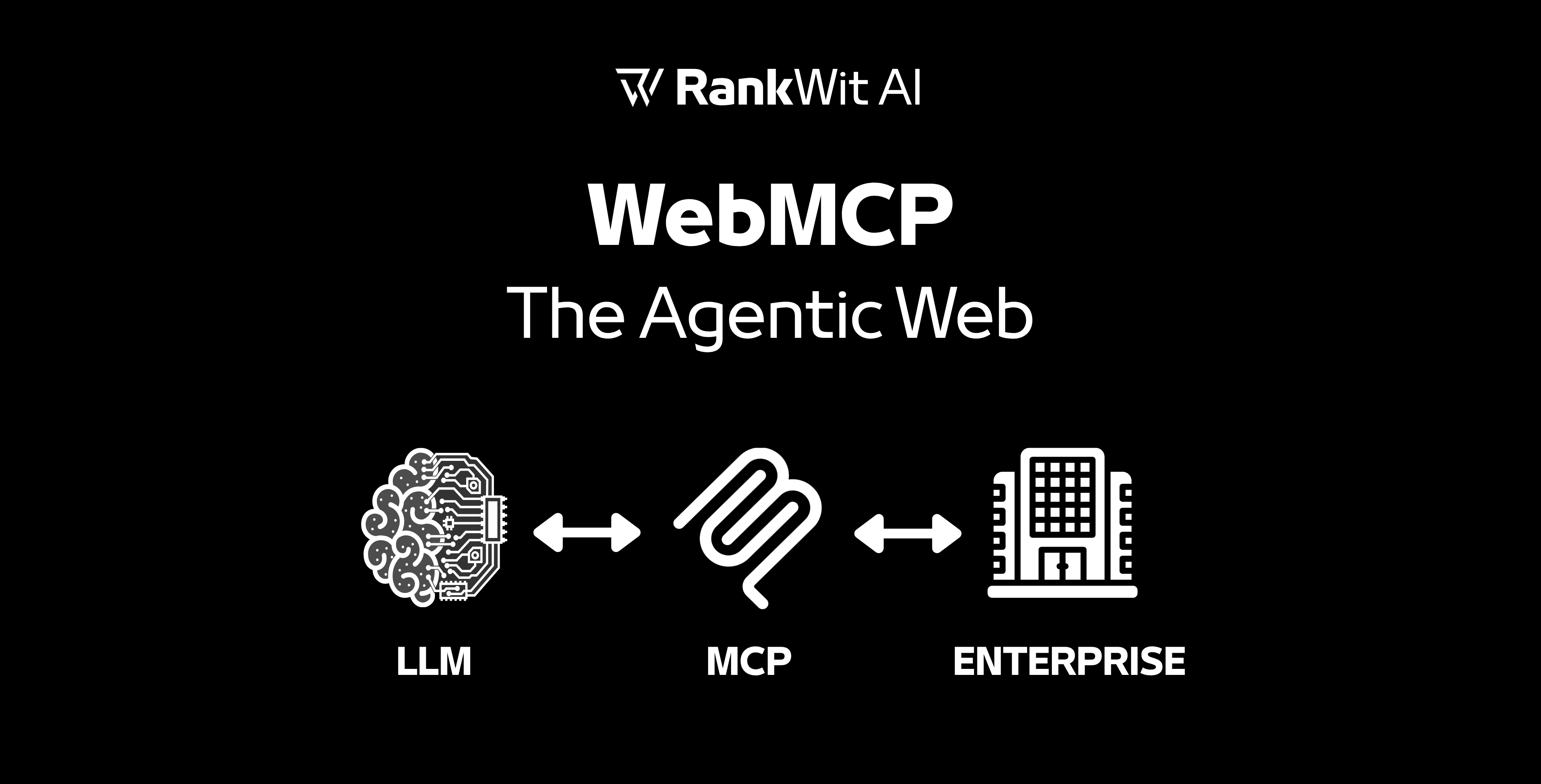
Is it difficult for developers to implement WebMCP on an existing website or application?
Arrow

Implementing WebMCP is streamlined through the Google Chrome Labs toolkit. Developers have two primary paths:

  • Declarative: Simply add toolname and tooldescription attributes to existing HTML <form> tags.
  • Imperative: Use the navigator.modelContext.registerTool() API to expose complex JavaScript functions as callable AI tools.This flexibility allows teams to start with basic functionality and scale to complex integrations without a total architecture overhaul.

Read More
ArrowArrow right blue
How can implementing schema markup and entity optimization improve a website’s visibility in modern AI-driven search engines?
Arrow

Schema markup provides structured information that helps search engines and AI models interpret your website more accurately. When combined with strong entity signals, it can improve indexing, enable rich search features, and increase the likelihood of being referenced in AI-powered search experiences.

Read More
ArrowArrow right blue
How is optimizing for AI-driven search engines different from traditional search engine optimization?
Arrow

While traditional SEO focuses mainly on keyword rankings and search result positions, AI search optimization emphasizes context, meaning, and relationships between topics. This approach helps AI systems better understand content and deliver more accurate responses to users.

Read More
ArrowArrow right blue
What kind of optimization recommendations does RankWit provide?
Arrow

RankWit analyzes your existing content and gives actionable, data-backed recommendations for improving your AI visibility. Suggestions include:

  • Rewriting sentences to be more concise and AI-parsable
  • Restructuring content into formats AI engines prefer (e.g., lists, FAQs, summaries)
  • Highlighting authority signals, such as including stats, sources, or clear claims
    These optimizations are designed to increase the chances that AI platforms surface your content over competitors’.

Read More
ArrowArrow right blue
What role will generative AI and conversational search experiences play in the future of online search?
Arrow

Conversational search uses AI to understand complex questions and provide direct answers instead of just listing links. This shift allows users to ask follow-up questions, explore topics in depth, and receive more personalized results.

Read More
ArrowArrow right blue

📚 Learn, Apply, Win

Stay inspired with the latest stories, tips, and insights.
Explore articles designed to spark ideas, share knowledge, and keep you updated on what’s new.