📚 Learn, Apply, Win
Explore articles designed to spark ideas, share knowledge, and keep you updated on what’s new.
Large language models are becoming central to search engines, digital assistants, and AI-powered tools. As these systems expand, businesses will need to ensure their content is optimized so AI models can easily interpret and reference their information.
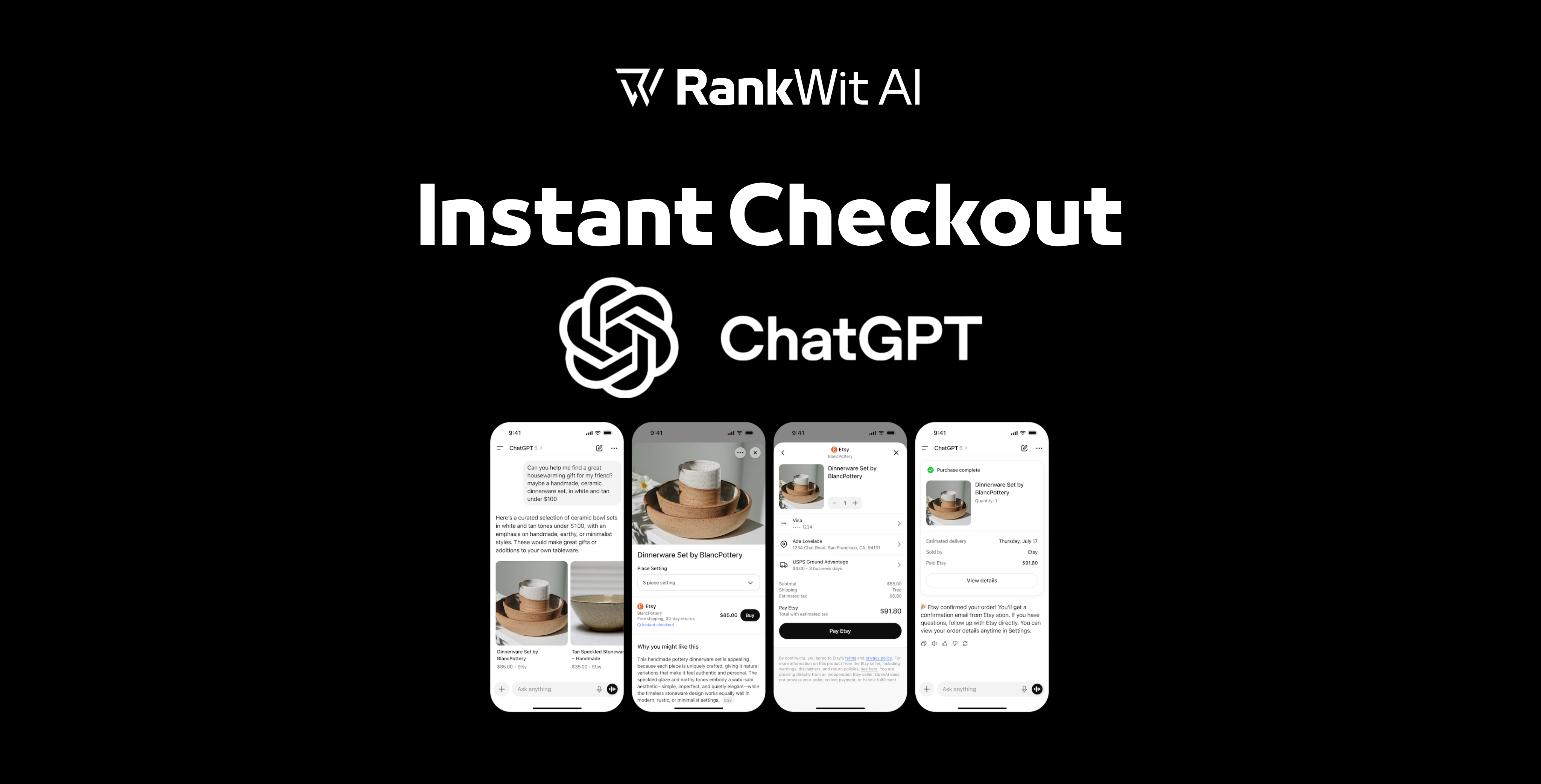
ChatGPT Instant Checkout is a new capability since 2025 developed by OpenAI that allows users to discover, configure, and purchase products directly within ChatGPT without leaving the conversation.
This functionality is powered by the Agentic Commerce Protocol (ACP), an open standard that defines how merchants’ systems interact with AI agents.
Merchants connect their product catalog through a structured product feed, expose checkout endpoints via the Agentic Checkout API, and process payments securely through delegated payment providers like Stripe.
Together, these layers create a smooth, conversational shopping experience that merges AI discovery with secure e-commerce execution.
RAG (Retrieval-Augmented Generation) is a cutting-edge AI technique that enhances traditional language models by integrating an external search or knowledge retrieval system. Instead of relying solely on pre-trained data, a RAG-enabled model can search a database or knowledge source in real time and use the results to generate more accurate, contextually relevant answers.
For GEO, this is a game changer.
GEO doesn't just respond with generic language—it retrieves fresh, relevant insights from your company’s knowledge base, documents, or external web content before generating its reply. This means:
By combining the strengths of generation and retrieval, RAG ensures GEO doesn't just sound smart—it is smart, aligned with your source of truth.
GEO requires a shift in strategy from traditional SEO. Instead of focusing solely on how search engines crawl and rank pages, Generative Engine Optimization (GEO) focuses on how Large Language Models (LLMs) like ChatGPT, Gemini, or Claude understand, retrieve, and reproduce information in their answers.
To make this easier to implement, we can apply the three classic pillars of SEO—Semantic, Technical, and Authority/Links—reinterpreted through the lens of GEO.
This refers to the language, structure, and clarity of the content itself—what you write and how you write it.
🧠 GEO Tactics:
🔍 Compared to Traditional SEO:
This pillar deals with how your content is coded, delivered, and accessed—not just by humans, but by AI models too.
⚙️ GEO Tactics:
🔍 Compared to Traditional SEO:
This refers to the signals of trust that tell a model—or a search engine—that your content is reliable.
🔗 GEO Tactics:
🔍 Compared to Traditional SEO:
Yes, that is the primary goal. Travelers who discover you through AI recommendations land on your official site with high intent, ready to book or visit.
For hotels, this means bypassing OTA commissions; for destinations, it means driving traffic to local ecosystems and official portals.
Often, the increase in direct, high-value traffic allows the service to pay for itself many times over.