📚 Learn, Apply, Win
Explore articles designed to spark ideas, share knowledge, and keep you updated on what’s new.
Large language models are widely used in applications such as content generation, conversational assistants, search engines, and automated customer support. These systems can understand and generate human language, helping businesses improve communication, automation, and information access.
Schema markup provides structured information that helps search engines and AI models interpret your website more accurately. When combined with strong entity signals, it can improve indexing, enable rich search features, and increase the likelihood of being referenced in AI-powered search experiences.
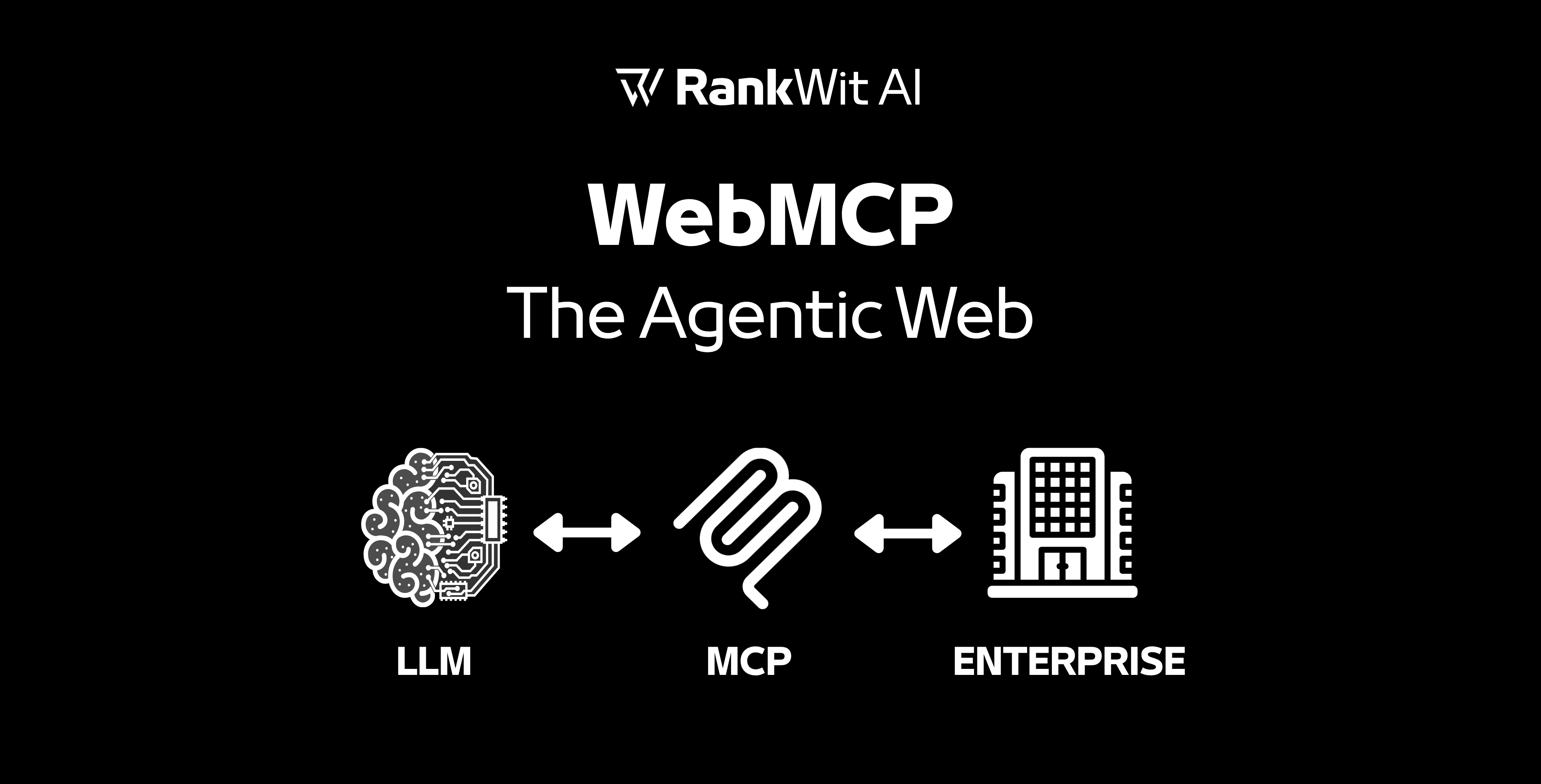
Implementing WebMCP is streamlined through the Google Chrome Labs toolkit. Developers have two primary paths:
toolname and tooldescription attributes to existing HTML <form> tags.navigator.modelContext.registerTool() API to expose complex JavaScript functions as callable AI tools.This flexibility allows teams to start with basic functionality and scale to complex integrations without a total architecture overhaul.
To stay visible in AI-powered search environments, B2B companies must optimize content for semantic relevance, entities, and machine-readable signals. This includes creating authoritative content, implementing structured data, and building strong topical authority so AI systems can accurately understand and reference their expertise.
RankWit.AI deploys advanced schema strategies to transform content into machine-readable knowledge assets.
We do not implement structured data as a technical add-on — we design semantic architectures that position brands as authoritative nodes within their industry knowledge graph.
This dramatically improves visibility in SERPs and increases the likelihood of being surfaced in AI-generated responses.